Circuit length
5.891 km
British Grand Prix · United Kingdom
F1 circuit guide
Silverstone Circuit is a Formula 1 circuit in United Kingdom associated with the British Grand Prix. Its key figures include a 5.891 km layout, 18 turns, 52 race laps, and 11 metres of elevation change. This guide covers track statistics, lap records, famous corners, iconic Grand Prix moments, and Formula 1 history.
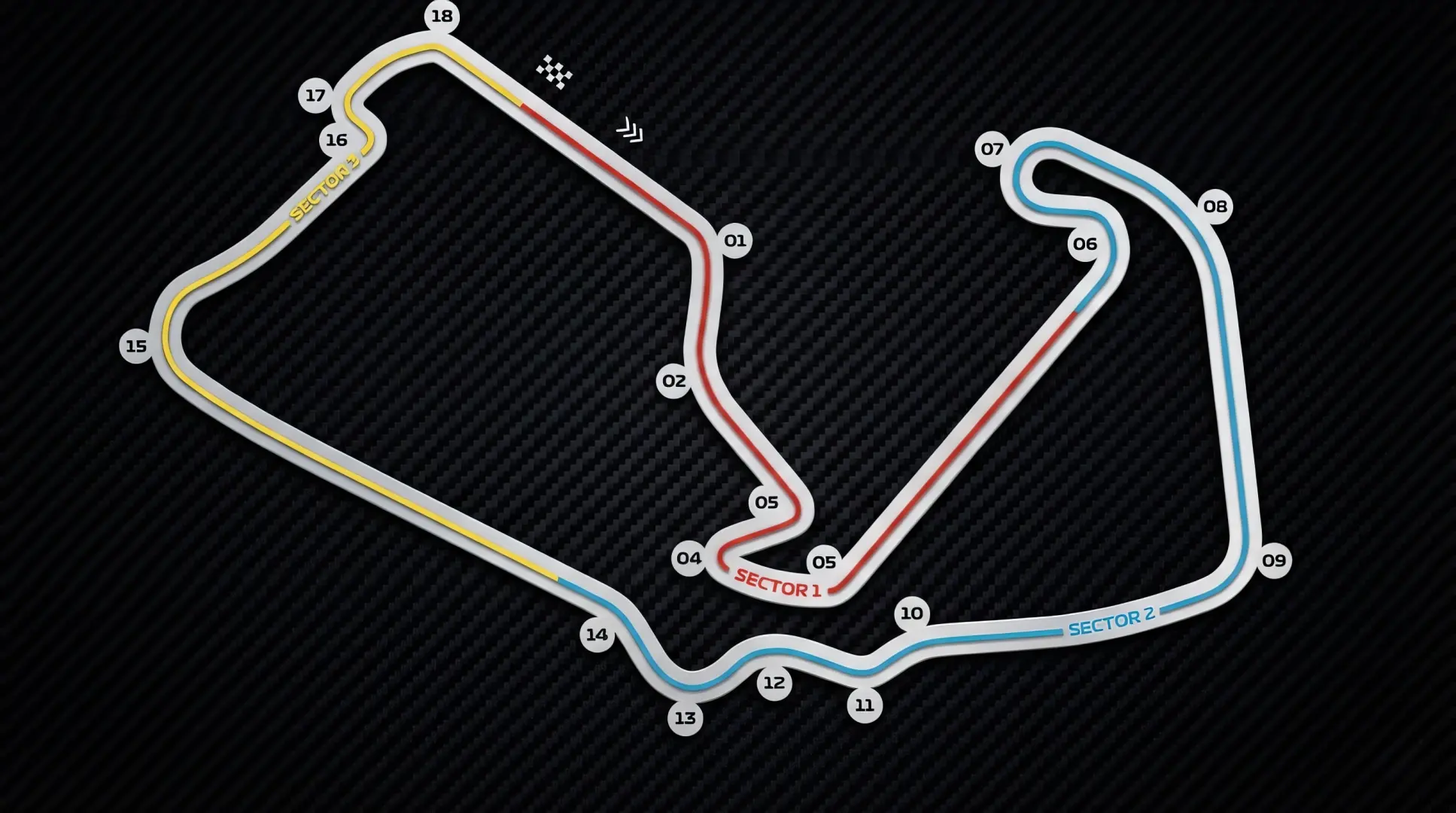
Compare the circuit length, turns, race distance, lap and pole records, driver wins, and elevation details for this Formula 1 track.
5.891 km
18
52
1:27.097
Max Verstappen
Fastest Q3 lap that secured Grand Prix pole on the applicable layout.
1:24.303
Lewis Hamilton
Lewis Hamilton
9 wins
11 m
A high-speed right-hand corner taken at over 290 km/h, one of the fastest corners in Formula One.
A challenging sequence of high-speed S-curves that test both car and driver to the limit.
In torrential rain, Lewis Hamilton dominated the field, finishing over a minute ahead of second place in one of the most commanding drives in modern F1 history.
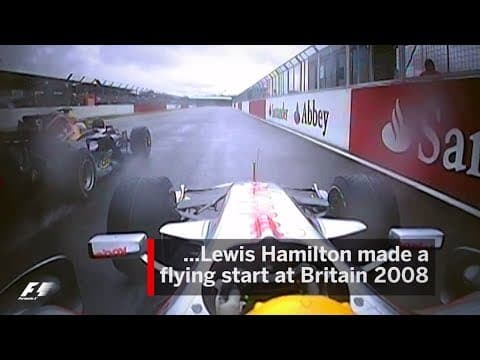 Watch iconic moment on YouTube
Silverstone stands as the spiritual home of Formula One and one of the most historically significant racing circuits in the world. From its origins as a World War II airfield to becoming the birthplace of the Formula One World Championship, Silverstone's story is intertwined with the very DNA of international motorsport.
Silverstone's racing history began in the most unlikely of circumstances. During World War II, the site served as RAF Silverstone, a training airfield for Wellington bomber crews. The airfield was constructed in 1940 across farmland straddling the border between Northamptonshire and Buckinghamshire, featuring three intersecting concrete runways in the classic wartime triangular pattern.
As the war drew to a close, the Royal Automobile Club began searching for a suitable venue to revive British motor racing. RAC officials recognized the potential of abandoned airfields, with their wide, smooth surfaces and existing infrastructure. In 1947, the RAC secured a lease on the Silverstone site from the Air Ministry.
The first racing event at Silverstone took place on October 2, 1948, organized by the RAC as a somewhat improvised affair using the perimeter track around the airfield. This inaugural meeting featured a mix of racing cars and motorcycles, with the 500cc Formula Three cars proving particularly popular with spectators who had been starved of motorsport during the war years.
Silverstone's most significant contribution to motorsport history came on May 13, 1950, when it hosted the first-ever Formula One World Championship race. The British Grand Prix that day featured twenty-one cars and attracted a crowd of approximately 100,000 spectators, including King George VI and Queen Elizabeth (later the Queen Mother) – the first time reigning British monarchs had attended a motor race.
Giuseppe Farina emerged victorious in his Alfa Romeo, leading a dominant 1-2-3 finish for the Italian team. This race established the template for the modern Formula One World Championship, with Silverstone earning the distinction of hosting the very first round of what would become the world's premier motorsport series.
The early circuit layout utilized portions of the airfield's runways and perimeter roads, creating a fast, challenging track that demanded both speed and precision. The original configuration was approximately 3.7 kilometers long and featured long straights connected by relatively few corners, characteristics that would define Silverstone's racing throughout its evolution.
Throughout the 1950s, Silverstone underwent continuous development as organizers sought to improve both safety and spectacle. The circuit's layout was modified several times, with the most significant change coming in 1952 when the track was reconfigured to bypass the old Club Corner, creating a new section that included Stowe Corner.
The 1960s brought more substantial modifications as safety concerns and the desire for better racing prompted further changes. In 1964, the circuit was completely redesigned by John Hugenholtz, creating the layout that would define Silverstone for the next three decades. This configuration eliminated the use of the old runways entirely, instead utilizing a purpose-built track that maintained the circuit's high-speed character while improving safety standards.
The new layout introduced several corners that became synonymous with Silverstone racing: Copse, Maggotts, Becketts, and Chapel. These corners, named after local landmarks, created a flowing sequence that tested driver skill while providing excellent spectator viewing. The famous Hangar Straight, running alongside one of the original aircraft hangars, became one of the circuit's most recognizable features.
The 1970s and 1980s represented Silverstone's golden era as the undisputed home of the British Grand Prix. The circuit developed a reputation for producing exceptional racing, with its high-speed nature and challenging corners creating numerous memorable moments. The venue's enthusiastic crowds, known for their deep knowledge of racing and vocal support for British drivers, added to the circuit's special atmosphere.
James Hunt's victory in the 1977 British Grand Prix exemplified Silverstone's ability to produce dramatic racing. Hunt's emotional win in front of his home crowd, following a season of intense rivalry with Niki Lauda, demonstrated the circuit's capacity to stage championship-defining moments. The crowd's invasion of the track before the race had even finished became one of the most iconic images in British motorsport history.
The circuit also witnessed several of the most significant moments in Ayrton Senna's career. His dominant victory in the rain-affected 1988 British Grand Prix, where he lapped all but four cars, showcased both his exceptional talent and Silverstone's challenging nature in adverse conditions. The circuit's exposure to unpredictable British weather became part of its character, often creating conditions that separated the exceptional drivers from the merely competent.
Safety improvements during this era included the installation of Armco barriers, improved run-off areas, and enhanced medical facilities. The circuit's management worked continuously with the FIA and Formula One authorities to maintain Silverstone's position as a premier racing venue while adapting to evolving safety standards.
The 1990s brought significant challenges to Silverstone's position as host of the British Grand Prix. Rising Formula One sanctioning fees, demands for improved facilities, and competition from other potential venues created uncertainty about the circuit's future. The venue's infrastructure, while historic and atmospheric, was beginning to show its age compared to newer, purpose-built Formula One facilities.
In 1996, a major redevelopment project began with the construction of new pit and paddock facilities designed by Norman Foster. The striking new pit complex, featuring a distinctive curved roof and modern amenities, demonstrated Silverstone's commitment to maintaining its Formula One status while preserving its historical character.
However, contractual disputes with Formula One Management led to uncertainty about the British Grand Prix's long-term future at Silverstone. From 1997 to 2009, the race alternated between Silverstone and the new Donington Park circuit, though Donington's financial difficulties ultimately secured Silverstone's position as the permanent home of the British Grand Prix.
The 2010 British Grand Prix marked the beginning of a new era for Silverstone with the introduction of a significantly modified circuit layout. The most substantial change was the construction of the "Arena" complex, which replaced the old Bridge Corner with a new infield section featuring several technical corners. This modification was designed to improve overtaking opportunities while creating better spectator viewing areas.
The new layout reduced lap times while maintaining Silverstone's essential high-speed character. The modification of Club Corner and the addition of new corners created additional overtaking opportunities, addressing longstanding concerns about processional racing. The changes were generally well-received by drivers, who appreciated the increased technical challenge while maintaining the circuit's flowing nature.
Silverstone's role in Formula One was further secured in 2017 when the circuit signed a new contract extending through 2024, with options for additional years. This agreement provided financial stability and allowed for continued investment in facilities and infrastructure improvements.
The British Racing Drivers Club has owned and operated Silverstone since 1952, making it unique among Formula One circuits in being owned by racing drivers themselves. This ownership structure has created both advantages and challenges throughout the circuit's history.
The BRDC's membership includes many of Britain's most successful racing drivers, from stirling Moss and Jackie Stewart to Lewis Hamilton and Jenson Button. This connection to racing talent has helped maintain Silverstone's authenticity and racing pedigree, but has also created financial pressures as the club balances commercial requirements with sporting traditions.
The club's ownership model has allowed Silverstone to maintain its character and independence while investing in necessary improvements. However, the rising costs of hosting Formula One have created ongoing financial challenges that require careful management to ensure the circuit's long-term viability.
Silverstone has served as a testing ground for numerous technological innovations in Formula One. The circuit's high-speed nature and challenging corners make it an ideal venue for developing aerodynamic packages and evaluating car performance. Many Formula One teams maintain their headquarters within a short distance of Silverstone, creating a concentration of motorsport expertise known as "Motorsport Valley."
The circuit has also been at the forefront of implementing new safety technologies. The introduction of SAFER barriers, improved debris fencing, and advanced medical facilities has helped establish best practices that have been adopted at circuits worldwide. Silverstone's willingness to invest in safety improvements has maintained its reputation as a leading example of circuit safety management.
Recent technological additions include enhanced digital systems for spectators, improved WiFi infrastructure, and mobile applications providing real-time race information. These developments reflect the circuit's commitment to enhancing the spectator experience while preserving its traditional racing atmosphere.
Silverstone's significance extends far beyond its role as a racing venue. The circuit has become a symbol of British motor racing heritage and engineering excellence. The annual British Grand Prix represents a celebration of the UK's contribution to Formula One, with approximately half of the sport's teams based within a short distance of the circuit.
The venue's museum, opened in 2019, chronicles both Silverstone's history and the broader story of British motor racing. The facility houses significant racing cars, memorabilia, and interactive exhibits that educate visitors about the sport's technical and cultural evolution.
Silverstone's influence on British popular culture is evidenced by its frequent appearance in films, television programs, and literature about motor racing. The circuit's distinctive architecture, from the original hangars to the modern pit complex, provides instantly recognizable imagery associated with Formula One racing.
The economic impact of Silverstone extends throughout the surrounding region, supporting thousands of jobs in motorsport, hospitality, and related industries. The annual British Grand Prix generates hundreds of millions of pounds in economic activity, while year-round activities including corporate events, track days, and racing schools provide additional revenue streams.
The circuit has also catalyzed the development of the surrounding area as a center for high-technology industries. Many advanced engineering and manufacturing companies have established operations near Silverstone, attracted by the concentration of technical expertise and the circuit's international profile.
Educational initiatives, including partnerships with local universities and technical colleges, help develop the next generation of motorsport professionals. These programs ensure that the knowledge and skills concentrated around Silverstone continue to benefit both the sport and the broader economy.
Silverstone has witnessed countless memorable moments throughout Formula One history. Lewis Hamilton's emotional victory in 2008, driving through the field in changeable conditions, demonstrated both the circuit's challenging nature and its ability to create dramatic racing. Hamilton's subsequent victories in 2014, 2015, 2016, 2017, 2019, and 2020 established him as the most successful driver in British Grand Prix history.
The 2013 race featured one of the most dramatic tire failures in Formula One history, with multiple drivers experiencing high-speed blowouts that led to significant changes in tire construction and regulations. The race highlighted Silverstone's demanding nature and the extreme loads placed on equipment by the circuit's high-speed corners.
More recently, the 2020 British Grand Prix saw Hamilton win despite suffering a puncture on the final lap, showcasing both his skill and the circuit's capacity for last-minute drama. The 2021 race featured the controversial collision between Hamilton and Max Verstappen at Copse Corner, demonstrating how Silverstone continues to produce championship-defining moments.
Silverstone faces several challenges as Formula One continues to evolve. The sport's increasing commercial demands require ongoing investment in facilities and infrastructure, while environmental concerns necessitate sustainable practices and technologies. The circuit has committed to achieving net-zero carbon emissions and implementing renewable energy systems.
The rise of new Formula One venues with substantial government backing creates competitive pressure for traditional circuits like Silverstone. However, the venue's historical significance, passionate fanbase, and central role in the Formula One community provide strong arguments for its continued prominence in the sport.
Discussions about potential future layout modifications continue, with proposals aimed at further improving overtaking opportunities while preserving the circuit's essential character. Any changes must balance sporting requirements with the venue's heritage and the expectations of longtime fans.
Silverstone's legacy as the birthplace of the Formula One World Championship ensures its permanent place in motorsport history. The circuit's role in developing countless racing drivers, from Lewis Hamilton to George Russell, demonstrates its ongoing contribution to the sport's future.
The venue represents the intersection of tradition and innovation that defines modern Formula One. While embracing necessary technological and commercial developments, Silverstone maintains the authentic racing atmosphere and challenging track characteristics that have made it beloved by drivers and fans alike.
As Formula One continues its global expansion, Silverstone serves as a reminder of the sport's roots and enduring appeal. The circuit's survival and success through decades of change demonstrate the value of preserving motorsport's historical venues while adapting to contemporary requirements.
The circuit's story reflects broader themes in British motor racing: innovation, determination, and the pursuit of excellence. From its humble beginnings as a wartime airfield to its status as Formula One's most historic venue, Silverstone embodies the spirit of competition and engineering achievement that defines the sport at its best.