Circuit length
4.259 km
Dutch Grand Prix · Netherlands
F1 circuit guide
Circuit Zandvoort is a Formula 1 circuit in Netherlands associated with the Dutch Grand Prix. Its key figures include a 4.259 km layout, 14 turns, 72 race laps, and 15 metres of elevation change. This guide covers track statistics, lap records, famous corners, iconic Grand Prix moments, and Formula 1 history.
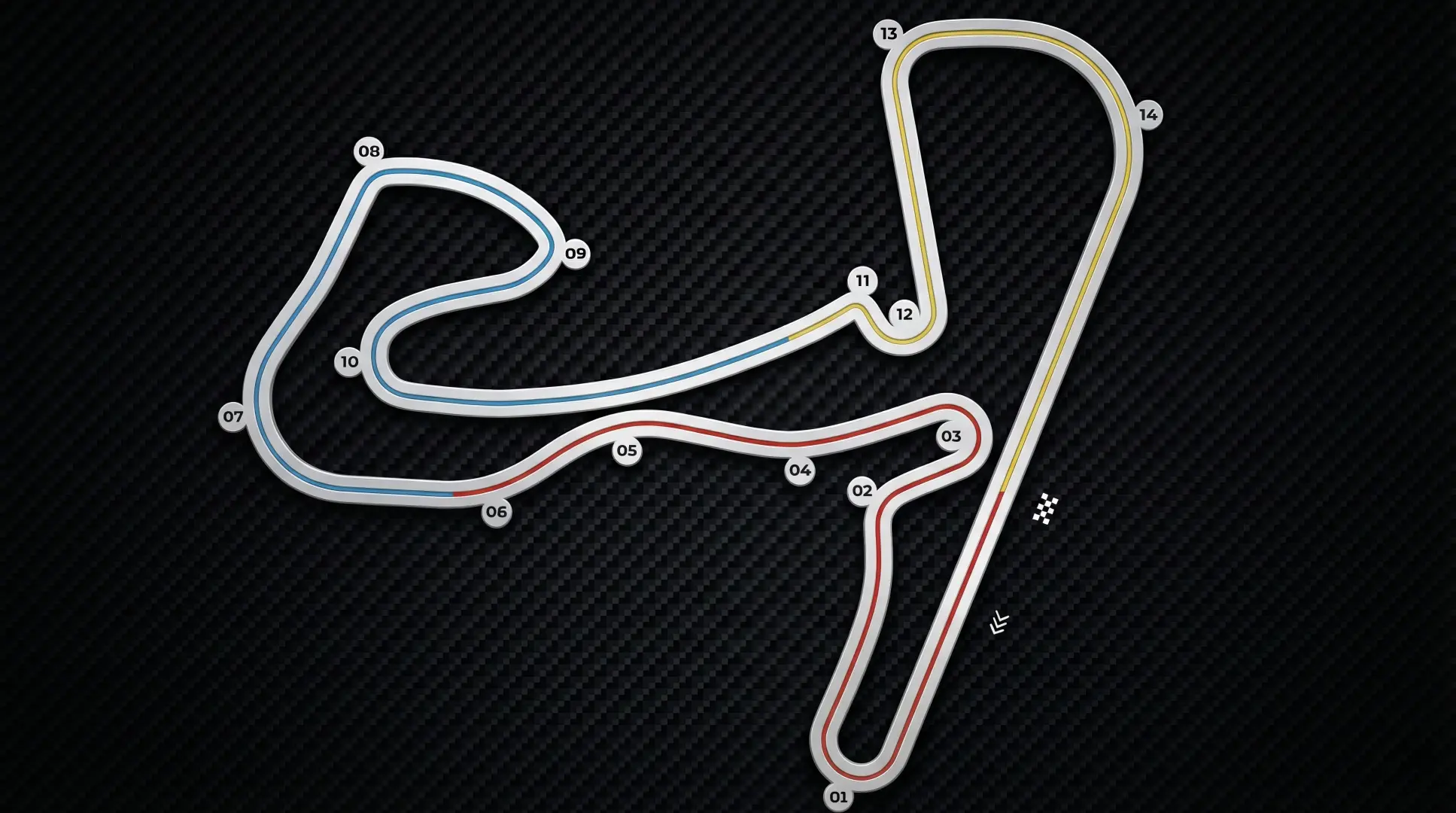
Compare the circuit length, turns, race distance, lap and pole records, driver wins, and elevation details for this Formula 1 track.
4.259 km
14
72
1:11.097
Lewis Hamilton
Fastest Q3 lap that secured Grand Prix pole on the applicable layout.
1:08.662
Oscar Piastri
Jim Clark
4 wins
15 m
A steeply banked, 18-degree left-hand corner that allows for multiple racing lines.
The final banked corner that slingshots cars onto the main straight.
After a puncture, a determined Gilles Villeneuve drove nearly a full lap at speed on just three wheels, his Ferrari's suspension flailing, in a legendary display of grit.
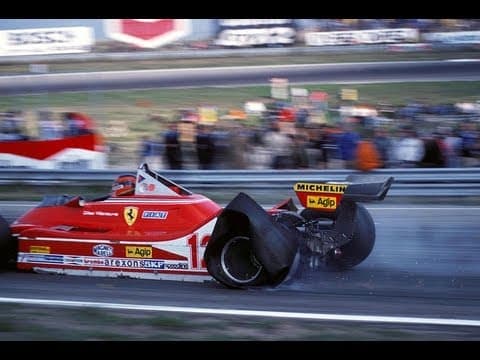 Watch iconic moment on YouTube
Circuit Zandvoort, nestled among the sand dunes of the Dutch coast, has a remarkable history that spans over seven decades of motorsport excellence.
The story of Circuit Zandvoort begins in the 1930s when Zandvoort was a resort town full of grandeur and jet setters. Mayor H. van Alphen saw the potential for racing to transform the fortunes of the town after a street race in 1939 proved a success. The first street race was held on 3 June 1939, but plans for a permanent circuit were interrupted by World War II.
The circuit's construction has a unique wartime connection. A permanent race track was not constructed until after the war, using communications roads built by the occupying German army. The mayor of Zandvoort at the time proposed the construction of a road along the sea front, ostensibly for a parade for the winners of the war. The actual purpose was to keep locals from being sent to Germany as slave labor.
Despite opposition from national politics, the circuit was finally completed using an innovative approach - with the rubble of the hotels who where destroyed during the war as foundation, a track was built.
The first race on the circuit, the Prijs van Zandvoort, took place on 7 August 1948. The track was initially 4.193 km (2.605 mi) and had the appearance of a very tight and twisty initial section, with the last 80% of the lap in the form of a fast and irregular oval.
Originally made up of a mixture of permanent track and public roads that snaked through the sand dunes of the Zandvoort resort town, the Dutch Automobile Racing Club – who initiated the plans for the circuit – brought in 1927 Le Mans winner Sammy Davis to consult on the layout for the original design.
The race was renamed the Grote Prijs van Zandvoort (Zandvoort Grand Prix) in 1949, then the Grote Prijs van Nederland (Dutch Grand Prix) in 1950.
The 1952 race was the first to be run as a round of the World Championship, with Alberto Ascari dominating the race as he led home a 1-2-3 for Ferrari. In the 1950s, the track through the dunes was fully embraced by Formula 1.
Formula 1 would go on to race on and off at the track until 1985. The last Formula 1 race at the Zandvoort circuit for the time being was on August the 25th 1985. Teammates Alain Prost and Niki Lauda where fighting al the way to the finish. Finally Niki Lauda won the race.
After 1985, the circuit went into decline thereafter and was drastically shortened, before becoming a popular home to the Masters Formula 3 race, helping to groom a wealth of young talent along the way.
In 2019, the announcement came that the championship would return to Zandvoort for 2020, though the race was cancelled as a result of the Covid-19 pandemic.
On 5th September 2021, Formula 1 finally raced at Zandvoort for the first time in 36 years, with Max Verstappen took the chequered flag, creating a perfect homecoming story for the Dutch driver.
Today, Circuit Zandvoort stands as a testament to the persistence of Dutch motorsport enthusiasm, having survived world war, decades of absence from Formula 1, and emerged stronger than ever as one of the most atmospheric venues on the modern Formula 1 calendar. The circuit's unique location among the coastal dunes continues to provide one of motorsport's most distinctive and challenging environments.