Circuit length
4.381 km
Hungarian Grand Prix · Hungary
The Hungaroring F1 circuit is a 4.381 km, 14-turn permanent track near Budapest. Short straights and linked corner sequences put a premium on rhythm, downforce and consistent car placement, while limited passing opportunities make qualifying and the approach to Turn 1 especially important.
F1 circuit guide
Hungaroring is a Formula 1 circuit in Hungary associated with the Hungarian Grand Prix. Its key figures include a 4.381 km layout, 14 turns, 70 race laps, and 36 metres of elevation change. This guide covers track statistics, lap records, famous corners, iconic Grand Prix moments, and Formula 1 history.
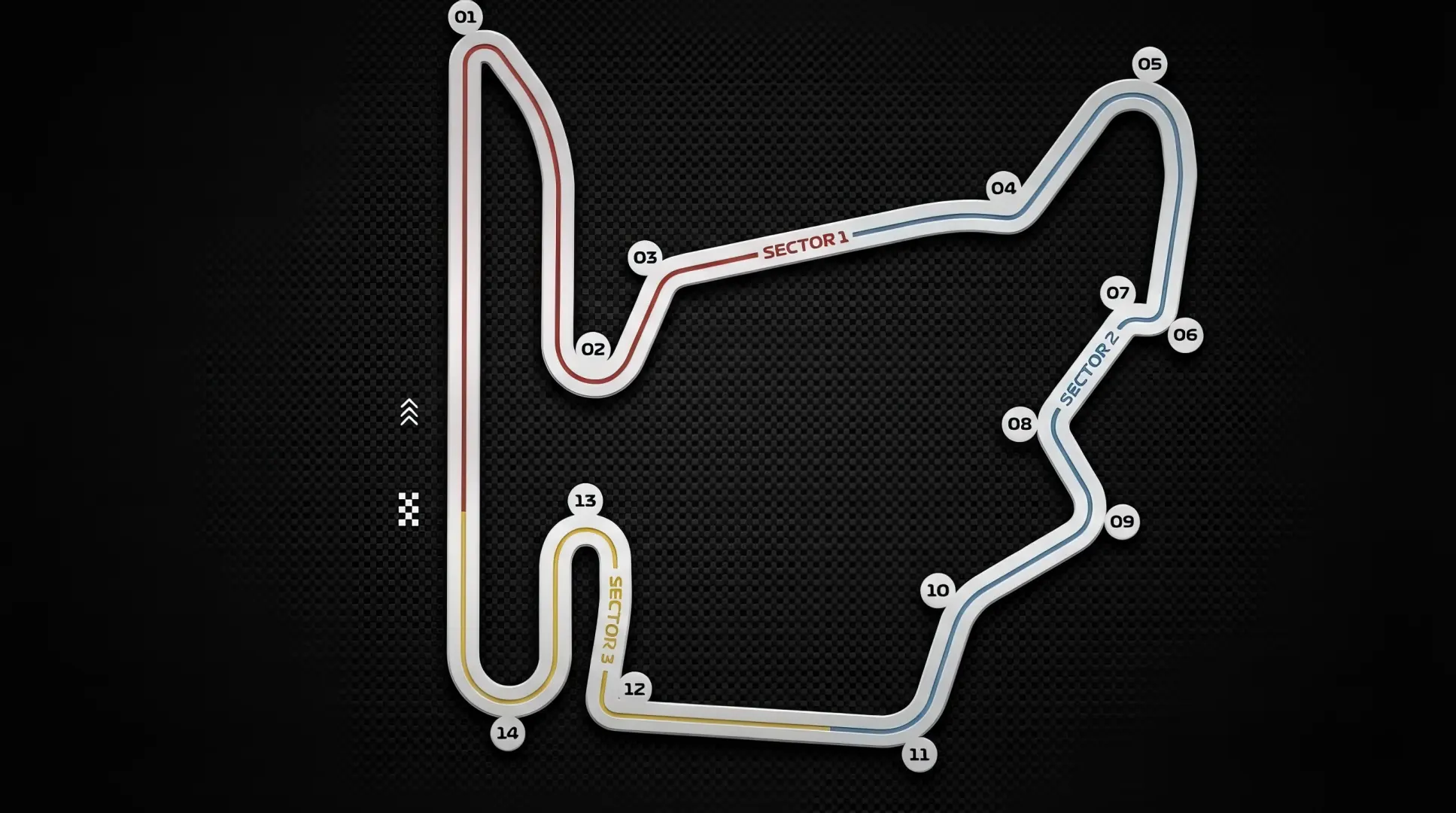
Compare the circuit length, turns, race distance, lap and pole records, driver wins, and elevation details for this Formula 1 track.
4.381 km
14
70
1:16.627
Lewis Hamilton
Fastest Q3 lap that secured Grand Prix pole on the applicable layout.
1:13.447
Lewis Hamilton
Lewis Hamilton
8 wins
36 m
Racing challenge
The Hungaroring is often compared with a karting circuit because one corner flows quickly into the next and there are few long straights on which a driver can reset. A mistake early in a sequence can compromise several corners, so the quickest laps come from maintaining rhythm and placing the car accurately through repeated changes of direction. The natural bowl around the circuit also gives the lap a compact character despite its range of medium- and low-speed turns.
Teams generally favour high downforce and a responsive chassis over maximum straight-line speed. Strong front-end grip helps the car rotate, while traction matters when accelerating from slower corners. Passing is difficult through much of the lap because the racing line is narrow and following another car can disturb aerodynamic grip. The main straight and braking zone for Turn 1 provide the clearest conventional opportunity, which makes the final corner exit valuable for an attack. Those constraints increase the importance of qualifying, tyre management and strategic timing during the race.
Consistency matters as much as a single spectacular corner. Drivers need to avoid sliding through the linked turns because lost grip can carry into the next part of the sequence. In race trim, protecting the tyres while staying close enough to use the Turn 1 opportunity creates a different challenge from the flat-out precision required in qualifying.
A downhill, tightening right-hand hairpin that is the best, and often only, overtaking opportunity.
A long, fast, blind-entry left-hander that is a favorite among drivers.
Damon Hill, driving for the uncompetitive Arrows team, brilliantly led the race until a hydraulic failure on the final lap cruelly denied him a certain victory.
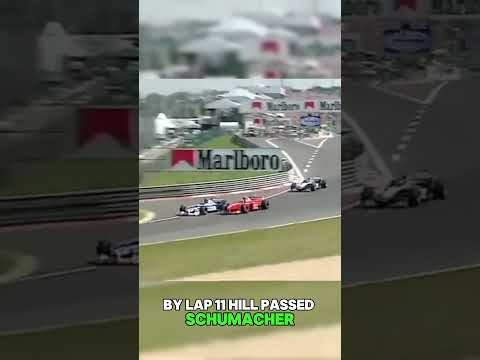 Watch iconic moment on YouTube
The Hungaroring holds a unique place in Formula 1 history as the first purpose-built circuit behind the Iron Curtain and the venue that opened Eastern Europe to Grand Prix racing. Located near Budapest, Hungary, this circuit's story is intertwined with political transformation, sporting ambition, and the gradual opening of the communist world to Western motorsport culture.
The origins of the Hungaroring trace back to the early 1980s when Hungary, under the leadership of János Kádár, began implementing limited economic reforms and cautiously opening to Western influences. Hungarian motorsport enthusiasts and government officials recognized that hosting a Formula 1 race could serve multiple purposes: showcasing Hungary's modernization efforts, attracting Western tourism, and demonstrating the country's technological capabilities.
The project gained momentum in 1983 when Hungarian officials approached Formula 1 commercial rights holder Bernie Ecclestone with a proposal to bring Grand Prix racing to Eastern Europe. The timing was fortuitous, as Formula 1 was seeking to expand its global reach and reduce its dependence on traditional European venues. Ecclestone saw the potential for significant political and commercial impact in establishing a race behind the Iron Curtain.
The Hungarian government committed substantial resources to the project, viewing it as a prestige development that would enhance the country's international profile. The circuit was designed to meet full FIA Grade 1 standards while incorporating features that would create exciting racing. The location chosen was approximately 20 kilometers northeast of Budapest, in rolling countryside near the town of Mogyoród.
Construction of the Hungaroring began in 1984, with the project managed by Hungarian engineers working alongside international consultants. The circuit design prioritized tight, technical corners over high-speed sections, partly due to topographical constraints but also to create opportunities for close racing and overtaking. The 4.381-kilometer layout featured 14 corners with significant elevation changes throughout.
The construction faced unique challenges due to Hungary's economic system and limited access to Western construction materials and equipment. Much of the work was completed using domestic resources and labor, with imported materials limited to essential safety components and specialized racing infrastructure. Despite these constraints, the project maintained high construction standards and stayed on schedule.
The circuit's design incorporated several innovative features for its time, including extensive spectator banking that took advantage of the natural hillside terrain. These grass-covered hills could accommodate large crowds while providing excellent viewing angles for most corners. The natural amphitheater created by the topography would later become one of the Hungaroring's defining characteristics.
Safety considerations were paramount from the beginning, with the design team incorporating wide run-off areas, modern barrier systems, and comprehensive marshal posts. The circuit met all contemporary FIA safety requirements and included provisions for future upgrades as standards evolved.
The Hungarian Grand Prix made its debut on August 10, 1986, creating history as the first Formula 1 race held in a communist country. The event attracted massive international attention, with global media coverage focusing as much on the political significance as the sporting spectacle. Nelson Piquet won the inaugural race for Williams-Honda, but the real victory belonged to Hungarian motorsport and the broader cause of East-West sporting cooperation.
The first race drew approximately 200,000 spectators over the weekend, with many fans traveling from across Eastern Europe to witness this unprecedented sporting event. The enthusiasm of the Hungarian crowds made an immediate impression on drivers and teams, establishing a reputation for passionate fan support that continues to this day.
The early years of the Hungarian Grand Prix were marked by the circuit's reputation as a great equalizer. The tight, twisty layout that limited the advantage of raw power meant that races often featured unexpected results and close battles throughout the field. This characteristic made the Hungarian Grand Prix particularly popular with fans and neutral observers.
Weather played a significant role in several early races, with the continental climate producing dramatic summer thunderstorms that could transform racing conditions within minutes. The 1988 race, won by Ayrton Senna in challenging wet conditions, demonstrated how the Hungaroring's layout could create compelling racing regardless of mechanical advantages.
The fall of communism in Eastern Europe between 1989 and 1991 dramatically changed the context for the Hungarian Grand Prix. What began as a bridge between East and West became a symbol of Hungary's successful transition to democracy and market economics. The race's continued success during this turbulent period provided stability and international recognition for the new Hungarian state.
The 1990s brought significant infrastructure improvements to the Hungaroring as Hungary's economy modernized and integrated with Western Europe. The circuit benefited from improved access roads, expanded facilities, and upgraded safety systems. These developments were partly funded by increased revenue from Western sponsors and television rights, which became more accessible after political liberalization.
During this period, the circuit established itself as one of Formula 1's most challenging venues for overtaking. The tight nature of the track meant that qualifying position became increasingly important, leading to the development of the Hungarian Grand Prix's reputation as a "parade" race. However, this characteristic also meant that any position changes were hard-fought and significant.
The Hungaroring became a crucial testing ground for Formula 1 teams' technical development. The circuit's unique demands for mechanical grip and aerodynamic efficiency made it an ideal venue for evaluating car performance across different parameters. Many teams used the Hungarian Grand Prix as a benchmark for their overall competitive position.
The new millennium brought extensive modernization to the Hungaroring as Hungary prepared for European Union membership and sought to maintain its position on the Formula 1 calendar. Major infrastructure projects included new pit buildings, expanded grandstands, and improved media facilities that met contemporary broadcasting requirements.
In 2003, the circuit underwent its most significant layout modification since opening. The chicane section was redesigned to create additional overtaking opportunities, though the fundamental character of the circuit remained unchanged. This modification demonstrated the venue's commitment to improving racing while preserving its essential identity.
The facility's role expanded beyond Formula 1 during this period, with the Hungaroring hosting various other motorsport events including touring car races, motorcycle competitions, and driving experiences. This diversification helped ensure the circuit's financial stability while maintaining year-round activity.
Hungary's EU accession in 2004 brought new opportunities for circuit development through European funding programs and improved transportation links. The enhanced accessibility made the Hungarian Grand Prix more attractive to international fans and helped establish Budapest as a popular destination for motorsport tourism.
The 2010s marked a golden period for the Hungaroring, with several memorable races that challenged the circuit's reputation for processional racing. Strategic innovations, tire degradation patterns, and changing weather conditions combined to produce some of the most exciting Hungarian Grands Prix in the race's history.
The circuit's management invested heavily in sustainability initiatives during this period, implementing renewable energy systems, waste reduction programs, and carbon offset schemes. These efforts aligned with Formula 1's broader environmental commitments and demonstrated the venue's forward-thinking approach to facility management.
Recent years have seen continued facility improvements, including upgraded spectator amenities, expanded hospitality offerings, and enhanced digital infrastructure. The circuit has embraced new technologies for fan engagement, including mobile applications, social media integration, and interactive experiences that enhance the race weekend atmosphere.
The COVID-19 pandemic tested the circuit's adaptability, with the 2020 Hungarian Grand Prix held without spectators and the 2021 event operating under restricted capacity. These challenges prompted innovations in remote fan engagement and demonstrated the venue's resilience in adapting to extraordinary circumstances.
Throughout its history, the Hungaroring has produced numerous memorable Formula 1 moments that have become part of the sport's folklore. The circuit's tight, technical nature has often neutralized car performance differences, leading to unexpected winners and dramatic championship implications.
Some of the most significant races include Damon Hill's emotional victory in 1993 following his father's accident at the same circuit, Fernando Alonso's strategic masterpiece in 2021 that secured his first podium in seven years, and numerous wet-weather classics that showcased driver skill over mechanical advantage.
The circuit has also served as a launching pad for several driver careers, with strong performances at the Hungaroring often indicating a driver's ability to extract maximum performance from challenging machinery. The venue's demands for precision, patience, and strategic thinking have made it a favorite among purist fans who appreciate technical racing.
The Hungaroring's significance extends far beyond motorsport, representing a successful example of international sporting cooperation and cultural exchange. The circuit's establishment helped normalize East-West relations during the final years of the Cold War and demonstrated sport's power to transcend political boundaries.
The venue has become an integral part of Hungarian national identity, with the annual Grand Prix serving as a showcase for Hungarian hospitality and organizational capabilities. The passionate local fanbase, combined with visitors from across Europe, creates a unique atmosphere that many consider among Formula 1's most authentic.
The circuit's economic impact on the region has been substantial, generating tourism revenue, creating employment opportunities, and spurring infrastructure development throughout the Budapest metropolitan area. The success of the Hungaroring has also inspired other Eastern European countries to pursue their own Formula 1 ambitions.
Looking ahead, the Hungaroring faces the challenge of maintaining its position on an increasingly competitive Formula 1 calendar while preserving the characteristics that make it unique. Recent contract extensions guarantee the Hungarian Grand Prix's continuation through the mid-2020s, providing stability for long-term planning and investment.
The circuit continues to evolve its role within the broader motorsport ecosystem, exploring opportunities in electric racing series, autonomous vehicle testing, and emerging motorsport technologies. These initiatives position the Hungaroring as a forward-thinking venue capable of adapting to motorsport's changing landscape.
Sustainability remains a key focus, with ongoing projects aimed at achieving carbon neutrality and minimizing environmental impact. These efforts reflect both regulatory requirements and the venue's commitment to responsible stewardship of its natural setting.
As the Hungaroring approaches its fifth decade of operation, it stands as a testament to visionary planning, successful adaptation, and the enduring appeal of challenging, technical racing circuits. Its journey from Cold War breakthrough to modern motorsport institution illustrates how sporting venues can transcend their original purpose to become lasting symbols of cultural and political transformation.
The Hungaroring is in Mogyorod, around 20 km from central Budapest in Hungary. It is a permanent circuit built in a natural bowl.
The Hungaroring is 4.381 km long and has 14 turns. The Hungarian Grand Prix is contested over 70 laps for a race distance of 306.630 km.
Turn 1, reached after the main straight, is the circuit's principal passing zone. Elsewhere, linked corners and short straights make it difficult to draw alongside another car.
Fact checked and reviewed .