Circuit length
4.318 km
Austrian Grand Prix · Austria
F1 circuit guide
Red Bull Ring is a Formula 1 circuit in Austria associated with the Austrian Grand Prix. Its key figures include a 4.318 km layout, 10 turns, 71 race laps, and 65 metres of elevation change. This guide covers track statistics, lap records, famous corners, iconic Grand Prix moments, and Formula 1 history.
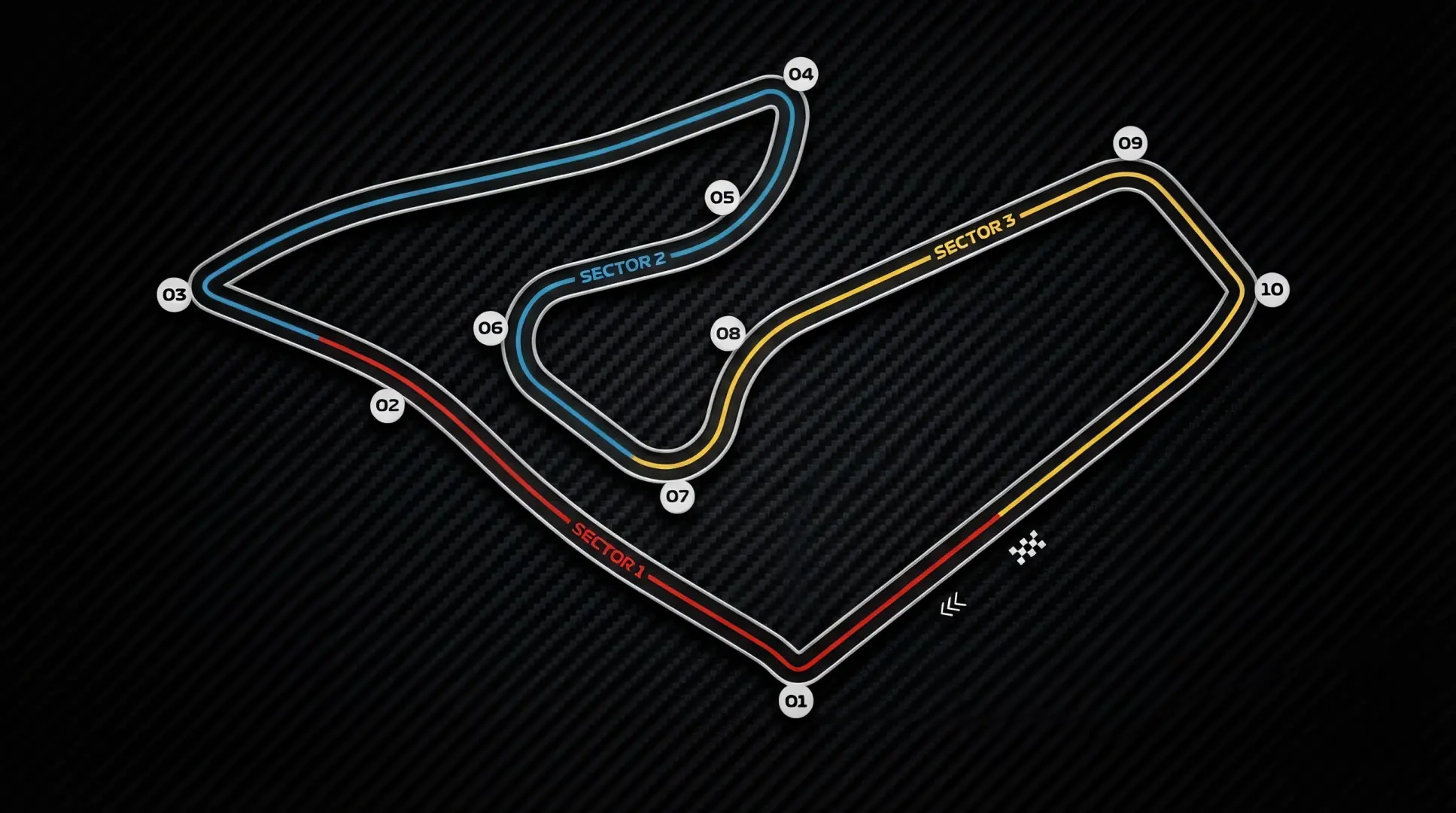
Compare the circuit length, turns, race distance, lap and pole records, driver wins, and elevation details for this Formula 1 track.
4.318 km
10
71
1:07.924
Oscar Piastri
Fastest Q3 lap that secured Grand Prix pole on the applicable layout.
1:02.939
Valtteri Bottas
Max Verstappen
5 wins
65 m
A sharp, uphill right-hander immediately after the start, a common place for action.
A tight hairpin at the end of a long straight and DRS zone, the track's best overtaking spot.
In a highly controversial moment, Ferrari ordered Rubens Barrichello to pull over just meters from the finish line to let teammate Michael Schumacher win, leading to a ban on team orders.
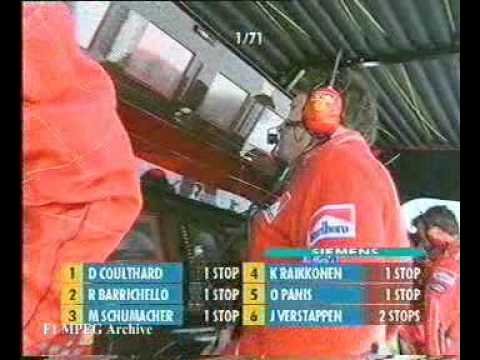 Watch iconic moment on YouTube
The Red Bull Ring, nestled in the picturesque Styrian mountains of Austria, represents one of motorsport's most remarkable stories of resurrection and transformation. From its origins as a modest hillclimb venue to its current status as one of Formula 1's most beloved circuits, this facility has weathered decades of triumph, abandonment, and spectacular rebirth.
The story begins in the early 1960s when Austrian motorsport enthusiasts identified the rolling hills near Spielberg as an ideal location for a permanent racing circuit. The original Österreichring was carved into the Styrian landscape in 1969, designed as a fast, flowing circuit that would showcase the natural beauty of the Austrian countryside while providing thrilling racing.
The circuit's inaugural major event came in 1970 when it hosted the Austrian Grand Prix for Formula 1. The original layout stretched 5.9 kilometers and featured sweeping corners that allowed drivers to maintain high speeds throughout most of the lap. The circuit's elevation changes, combined with its mountain setting, created a unique atmosphere that immediately distinguished it from other European venues.
During the 1970s, the Österreichring became synonymous with high-speed racing and dramatic weather changes. The mountain location meant that conditions could shift rapidly, with sunshine giving way to torrential rain within minutes. This unpredictability became part of the circuit's character and led to several memorable races where weather played a decisive role.
The circuit gained international recognition not just for its challenging layout but also for its stunning Alpine backdrop. Television broadcasts showcased panoramic views of the Austrian mountains, making the venue one of the most visually spectacular on the Formula 1 calendar. The natural amphitheater created by the surrounding hills provided excellent viewing opportunities for spectators.
The 1980s marked both the pinnacle and the beginning of the end for the original Österreichring. The circuit hosted some of Formula 1's most exciting races during this decade, with its high-speed nature producing close racing and frequent overtaking opportunities. The long straights and fast corners favored powerful engines, making it a favorite among teams with strong aerodynamic packages.
However, the same characteristics that made the circuit exciting also raised increasing safety concerns. As Formula 1 cars became progressively faster, the combination of high speeds and limited run-off areas at certain corners began to worry drivers and officials. Several serious accidents during the late 1980s and early 1990s highlighted these safety deficiencies.
The Austrian Grand Prix of 1987 proved to be a turning point, featuring a dramatic accident that, while not fatal, demonstrated the circuit's safety limitations. The incident prompted lengthy discussions about necessary modifications, but the extensive changes required would have fundamentally altered the circuit's character and demanded substantial financial investment.
Economic pressures also mounted during this period. The costs of hosting Formula 1 had risen dramatically, while attendance figures fluctuated based on the success of Austrian drivers and teams. The combination of safety concerns and financial challenges created an increasingly unsustainable situation for the circuit's operators.
By the mid-1990s, it became clear that the Österreichring in its original form could no longer meet modern Formula 1 standards. The circuit last hosted a Formula 1 race in 1987, though it continued to host other motorsport events throughout the early 1990s. The facility gradually fell into disrepair as investment dried up and major racing series moved elsewhere.
The salvation came from an unexpected source: mobile phone entrepreneur Gerhard Berger and a consortium of Austrian businessmen who purchased the circuit in the late 1990s. Their vision was to completely redesign the facility, creating a shorter, safer, but equally challenging circuit that could meet contemporary safety standards while preserving the venue's essential character.
Construction of the new A1-Ring began in 1995, with Hermann Tilke leading the design process. The new layout retained the circuit's most distinctive features – its dramatic elevation changes and mountain setting – while addressing safety concerns through expanded run-off areas, modern barrier systems, and improved medical facilities. The circuit length was reduced to 4.3 kilometers, but the essential flow and character remained intact.
The A1-Ring reopened in 1997, immediately attracting praise for its thoughtful redesign. The circuit successfully balanced modern safety requirements with the exciting racing characteristics that had made the original Österreichring famous. The facility also featured state-of-the-art spectator amenities, including improved access roads, expanded parking, and modern hospitality facilities.
Formula 1 returned to Austria in 1997, with the A1-Ring hosting the Austrian Grand Prix until 2003. These years produced several memorable races, including Mika Häkkinen's dramatic victory in 1998 and Michael Schumacher's controversial win in 2002. The circuit's compact nature and challenging corners created close racing and frequent position changes.
Despite successful racing and generally positive reviews, the A1-Ring's Formula 1 tenure ended after 2003 due to commercial disagreements and declining attendance. The loss of Formula 1 was a significant blow to the circuit's profile and financial stability. However, the facility continued operating, hosting DTM (Deutsche Tourenwagen Masters), various motorcycle racing series, and other motorsport events.
During this period, the circuit struggled to find a sustainable business model. Without Formula 1's global exposure and revenue, maintaining the facility's high standards became increasingly challenging. The venue's remote location, while scenic, made it difficult to attract large crowds for non-Formula 1 events.
The circuit changed hands several times during these wilderness years, with various operators attempting different approaches to make the venue profitable. Some focused on track days and driving experiences, while others emphasized motorcycle racing and touring car championships. Despite these efforts, the facility's long-term future remained uncertain.
Local government support proved crucial during this period, with Austrian authorities recognizing the circuit's importance to regional tourism and motorsport heritage. Subsidies and tax incentives helped maintain basic operations, but significant infrastructure improvements were deferred due to budget constraints.
The circuit's fortunes changed dramatically in 2011 when Red Bull GmbH, the Austrian energy drink company with extensive motorsport involvement, purchased the facility. Red Bull's acquisition was part of a broader strategy to create a comprehensive motorsport ecosystem, complementing their Formula 1 team operations and various other racing programs.
Red Bull immediately announced ambitious plans for the circuit's transformation. The company's vision extended far beyond simply restoring Formula 1; they aimed to create a world-class motorsport destination that would showcase their brand while advancing Austrian motorsport. The investment commitment was substantial, with Red Bull pledging over €70 million for circuit improvements and facility upgrades.
The renovation project began in earnest in 2011, with Red Bull maintaining circuit operations while simultaneously implementing major improvements. The track surface was completely renewed, safety systems were upgraded to exceed current FIA standards, and the entire facility infrastructure was modernized. The project timeline was aggressive, aiming to have the circuit ready for Formula 1's return within three years.
Red Bull's approach differed significantly from previous owners. Rather than viewing the circuit purely as a business venture, they integrated it into their global marketing and motorsport strategy. This alignment meant that commercial pressures were less immediate, allowing for long-term planning and substantial upfront investment without demanding immediate returns.
Formula 1 returned to Austria in 2014, with the newly christened Red Bull Ring hosting the Austrian Grand Prix after an eleven-year absence. The circuit's comeback was triumphant, with the race immediately establishing itself as a fan favorite. The combination of close racing, stunning scenery, and enthusiastic crowds created an atmosphere that reminded many of Formula 1's golden era.
The 2014 Austrian Grand Prix showcased the circuit's improved facilities while demonstrating that its essential racing characteristics remained intact. Overtaking opportunities were plentiful, weather continued to play an occasional dramatic role, and the alpine setting provided television viewers with some of the sport's most beautiful imagery.
Red Bull's investment continued beyond Formula 1's return. The company established the Red Bull Ring as a comprehensive motorsport facility, hosting MotoGP, DTM, various junior formulae, and numerous Red Bull-branded events. The venue became a testing ground for Red Bull's racing technologies and a showcase for their motorsport philosophy.
The circuit's success led to an unprecedented development: starting in 2020, the Red Bull Ring began hosting two Formula 1 races per season. The Austrian Grand Prix was joined by the Styrian Grand Prix, making the venue one of only a few circuits to host multiple Formula 1 rounds annually. This arrangement was initially prompted by COVID-19 calendar disruptions but proved so successful that it continued in subsequent seasons.
Under Red Bull's ownership, the circuit has become a testbed for motorsport innovation. The facility regularly hosts development programs for electric racing series, autonomous vehicle testing, and advanced safety system trials. Red Bull's technology partnerships have brought cutting-edge timing systems, data acquisition capabilities, and broadcast innovations to the venue.
Sustainability initiatives have also become a priority, with Red Bull implementing renewable energy systems, waste reduction programs, and carbon offset schemes. The company has committed to making the Red Bull Ring a model for environmentally responsible motorsport venue operations.
The circuit's role in driver development has expanded significantly, with Red Bull using the facility for their junior driver programs and talent identification initiatives. The venue hosts regular training camps, simulator sessions, and development races for promising young drivers from around the world.
Recent infrastructure projects have focused on enhancing the spectator experience while preserving the circuit's natural setting. New grandstands offer improved sightlines, while expanded hospitality facilities cater to the venue's growing international audience. Careful attention has been paid to integrating these developments with the surrounding landscape.
The Red Bull Ring's story represents more than just the revival of a racing circuit; it demonstrates how visionary ownership and substantial investment can transform a struggling facility into a crown jewel of international motorsport. The venue's success has had broader implications for the Formula 1 calendar, proving that smaller, purpose-built circuits can provide better racing than some larger, more traditional venues.
The circuit has also become a symbol of Austrian motorsport resurgence. The success of the Red Bull Ring, combined with Red Bull's Formula 1 achievements, has inspired increased participation in motorsport throughout Austria and has elevated the country's profile in international racing circles.
Today, the Red Bull Ring stands as one of Formula 1's most beloved venues, consistently ranking among fans' favorite circuits. Its combination of challenging racing, spectacular scenery, and passionate crowds has created a unique atmosphere that harks back to motorsport's romantic era while embracing modern technology and safety standards. The circuit's remarkable journey from abandonment to global acclaim serves as an inspiring example of what can be achieved through vision, investment, and unwavering commitment to excellence.