Circuit length
6.003 km
Azerbaijan Grand Prix · Azerbaijan
The Baku F1 circuit is a 6.003 km street track that combines 20 corners around the city's Old Town with a very long, high-speed run beside the Caspian Sea. This guide covers the Baku City Circuit map, statistics, key sections and the setup compromise behind the Azerbaijan Grand Prix.
F1 circuit guide
Baku City Circuit is a Formula 1 circuit in Azerbaijan associated with the Azerbaijan Grand Prix. Its key figures include a 6.003 km layout, 20 turns, 51 race laps, and 28 metres of elevation change. This guide covers track statistics, lap records, famous corners, iconic Grand Prix moments, and Formula 1 history.
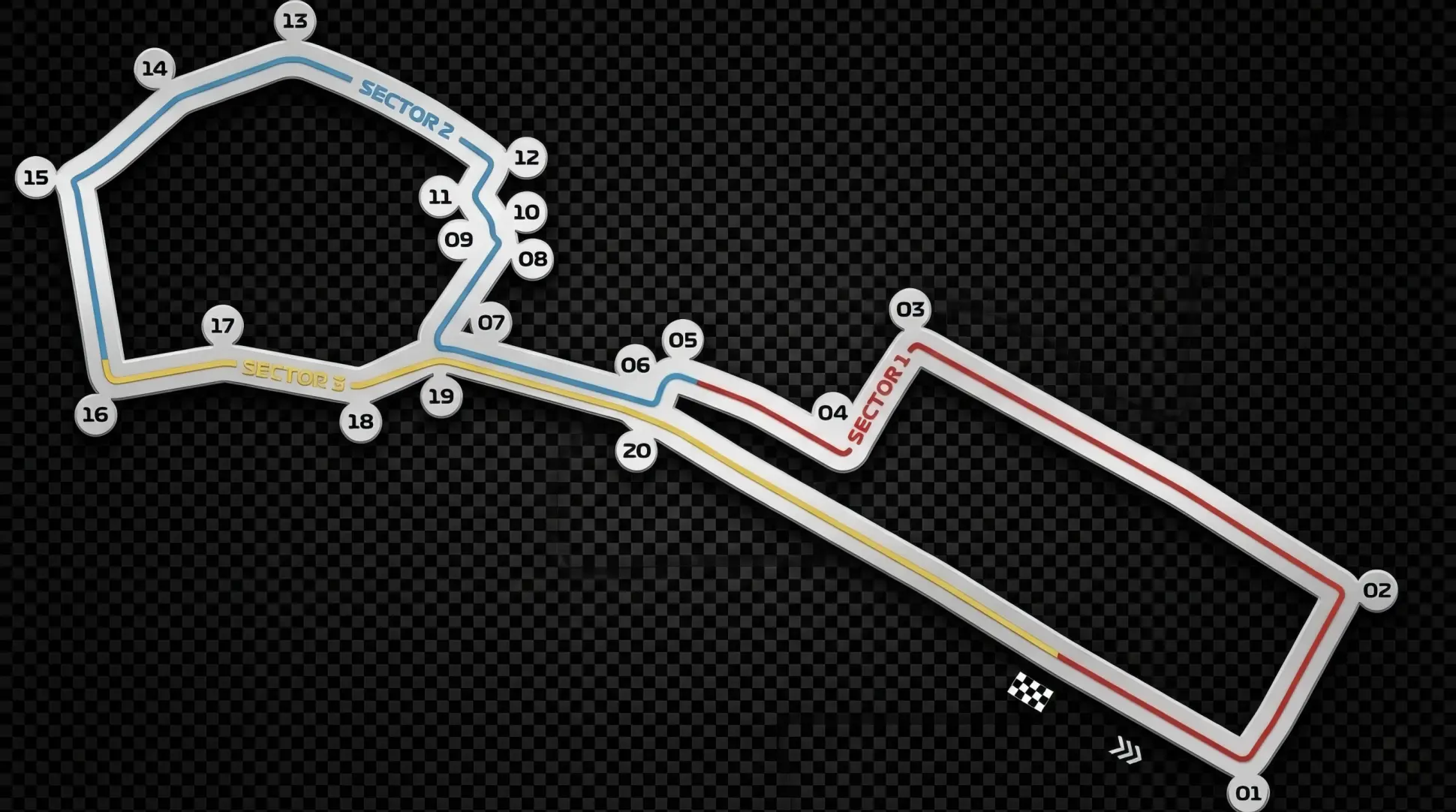
Compare the circuit length, turns, race distance, lap and pole records, driver wins, and elevation details for this Formula 1 track.
6.003 km
20
51
1:43.009
Charles Leclerc
Fastest Q3 lap that secured Grand Prix pole on the applicable layout.
1:40.203
Charles Leclerc
Sergio Pérez/Max Verstappen
2 wins
28 m
Racing challenge
Baku asks a Formula 1 car to handle two very different challenges in one lap. Much of the first sector is built from heavy braking and 90-degree corners, before the route narrows dramatically beside the medieval walls in the Old City. Drivers need traction, predictable braking and exact positioning through this section because a small mistake can block the track or end a session against the barriers.
After the technical middle of the lap, the circuit opens into a long flat-out run toward Turn 1. Straight-line efficiency creates attacking opportunities in the slipstream, but reducing drag can leave the car harder to manage through the slower corners. Teams therefore balance speed on the main straight against stability and downforce around the castle section. That contrast, combined with close walls and major braking zones, can bunch the field and turn restarts or small errors into large changes in race order.
Drivers also have to connect several right-angle corners without sacrificing the exits that lead onto faster sections. Braking confidence is central to lap time: stopping too cautiously costs speed, while locking a wheel can send the car straight toward a wall. A clean lap therefore depends on restraint in the Old City and commitment once the circuit opens out.
An incredibly narrow, uphill 90-degree left-hander past the old city wall, the tightest corner in F1.
A massive 2.2 km flat-out straight where cars reach some of their highest speeds of the season.
During a Safety Car period, championship rivals Sebastian Vettel and Lewis Hamilton controversially made contact, with Vettel pulling alongside and swiping the Mercedes in frustration.
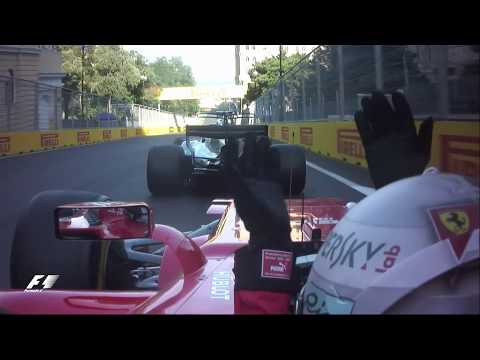 Watch iconic moment on YouTube
The story of the Baku City Circuit begins in 2014 when Azerbaijan announced its ambitious plan to bring Formula 1 racing to the country's capital. This initiative was part of Azerbaijan's broader strategy to enhance its international profile through major sporting events, similar to other nations in the region.
The project represented a significant investment in both infrastructure and Azerbaijan's sporting ambitions. The government sought to create not just a racing venue, but a showcase that would highlight Baku's unique blend of ancient architecture and modern development along the Caspian Sea.
Hermann Tilke, the renowned German circuit designer responsible for many modern Formula 1 venues, was commissioned to create the Baku City Circuit. Tilke faced the unique challenge of designing a street circuit that would incorporate the historic Old City of Baku while providing the high-speed racing that Formula 1 demands.
The resulting design was a 6.003-kilometer (3.730-mile) anti-clockwise circuit that winds through the heart of Baku. The track was strategically positioned near the main promenade along the Caspian Sea, offering spectacular backdrops of both the historic city walls and the modern Baku skyline.
What made Baku particularly distinctive was its combination of incredibly long straights and tight, technical sections. The main straight, running along the seafront, became one of the longest in Formula 1, while the section threading through the Old City required precision and skill reminiscent of Monaco.
The Baku City Circuit made its Formula 1 debut on June 19, 2016, hosting the European Grand Prix. This marked the return of the European Grand Prix title to the Formula 1 calendar after a six-year absence, adding historical significance to the inaugural race.
The debut race was memorable for several reasons. Nico Rosberg won for Mercedes, but the event was marked by dramatic moments typical of street circuits, including multiple safety car periods and incidents that would become characteristic of racing in Baku. The race demonstrated both the circuit's potential for exciting racing and the challenges posed by its unique layout.
In 2017, the circuit evolved from hosting the European Grand Prix to the Azerbaijan Grand Prix, establishing its permanent identity on the Formula 1 calendar. This change reflected the country's desire to have its own dedicated grand prix rather than hosting a generic European event.
The inaugural Azerbaijan Grand Prix proved to be one of the most dramatic races in recent Formula 1 history. The event featured multiple lead changes, dramatic crashes, and ended with Daniel Ricciardo taking victory for Red Bull Racing after a chaotic final restart.
The Baku City Circuit quickly established itself as one of Formula 1's most unpredictable venues. Its unique characteristics include:
High-Speed Sections: The long straights, particularly the main straight along the Caspian Sea, allow cars to reach some of the highest speeds of the Formula 1 season, earning Baku the distinction of being the fastest street circuit on the calendar.
Technical Challenges: The narrow section through the Old City, particularly the 90-degree turn at Turn 8, requires exceptional precision and has caught out many drivers over the years.
Overtaking Opportunities: Despite being a street circuit, Baku provides multiple overtaking opportunities, particularly into Turn 1 and at the end of the long back straight.
The circuit has produced numerous memorable moments, including dramatic crashes, unexpected winners, and races that have significantly impacted championship battles. The 2018 race saw teammates Lewis Hamilton and Valtteri Bottas collide, while the 2021 Azerbaijan Grand Prix featured Max Verstappen's dramatic tire failure while leading and Sergio Pérez's subsequent victory.
Beyond the racing circuit itself, Baku invested heavily in supporting infrastructure. The permanent facilities include modern pit buildings, grandstands that take advantage of the scenic location, and logistics centers capable of supporting the complex requirements of a Formula 1 event.
The circuit's location in the city center required careful planning to minimize disruption to daily life while creating a world-class racing facility. Special consideration was given to preserving and highlighting the historic elements of the Old City, creating a unique juxtaposition between ancient and modern.
The success of the Baku City Circuit helped establish Azerbaijan as a credible host for major international sporting events. The venue's ability to combine high-quality racing with spectacular visuals made it a favorite among television audiences worldwide.
The circuit also contributed to tourism growth in Azerbaijan, with the Grand Prix weekend becoming one of the country's premier annual events. The international exposure provided by Formula 1 has helped showcase Baku's cultural heritage and modern development to a global audience.
As of 2025, the Azerbaijan Grand Prix remains a fixture on the Formula 1 calendar, with contracts ensuring its place through at least 2026. The Baku City Circuit Operation Company continues to manage the event, working closely with Formula 1 to maintain and improve the facilities.
The circuit has evolved beyond just hosting Formula 1, also welcoming other racing series and automotive events throughout the year. This diversification helps justify the infrastructure investment while keeping the circuit active and relevant in the motorsport world.
In less than a decade, the Baku City Circuit has established itself as one of Formula 1's most distinctive venues. It represents a successful example of how modern street circuits can be created to provide exciting racing while showcasing a host city's unique character.
The circuit's history demonstrates Azerbaijan's successful entry into the upper echelons of international motorsport, creating a lasting legacy that extends beyond racing to encompass cultural exchange, tourism development, and international recognition.
From its ambitious beginnings in 2014 to its current status as an established Formula 1 venue, the Baku City Circuit stands as a testament to what can be achieved when vision, investment, and careful planning come together in the pursuit of sporting excellence.
Baku City Circuit is 6.003 km long and has 20 turns. The Azerbaijan Grand Prix covers 51 laps for a race distance of 306.049 km.
Yes. The course uses streets in central Baku, including a narrow section beside the Old City walls and a long run along the Caspian Sea waterfront.
The strongest chances usually come under heavy braking after the long flat-out sections, especially into Turn 1. Drivers can use the slipstream on the main straight, but must still judge braking precisely beside the barriers.
Fact checked and reviewed .