Circuit length
4.940 km
Singapore Grand Prix · Singapore
F1 circuit guide
Marina Bay Street Circuit is a Formula 1 circuit in Singapore associated with the Singapore Grand Prix. Its key figures include a 4.940 km layout, 19 turns, 62 race laps, and 0 metres of elevation change. This guide covers track statistics, lap records, famous corners, iconic Grand Prix moments, and Formula 1 history.
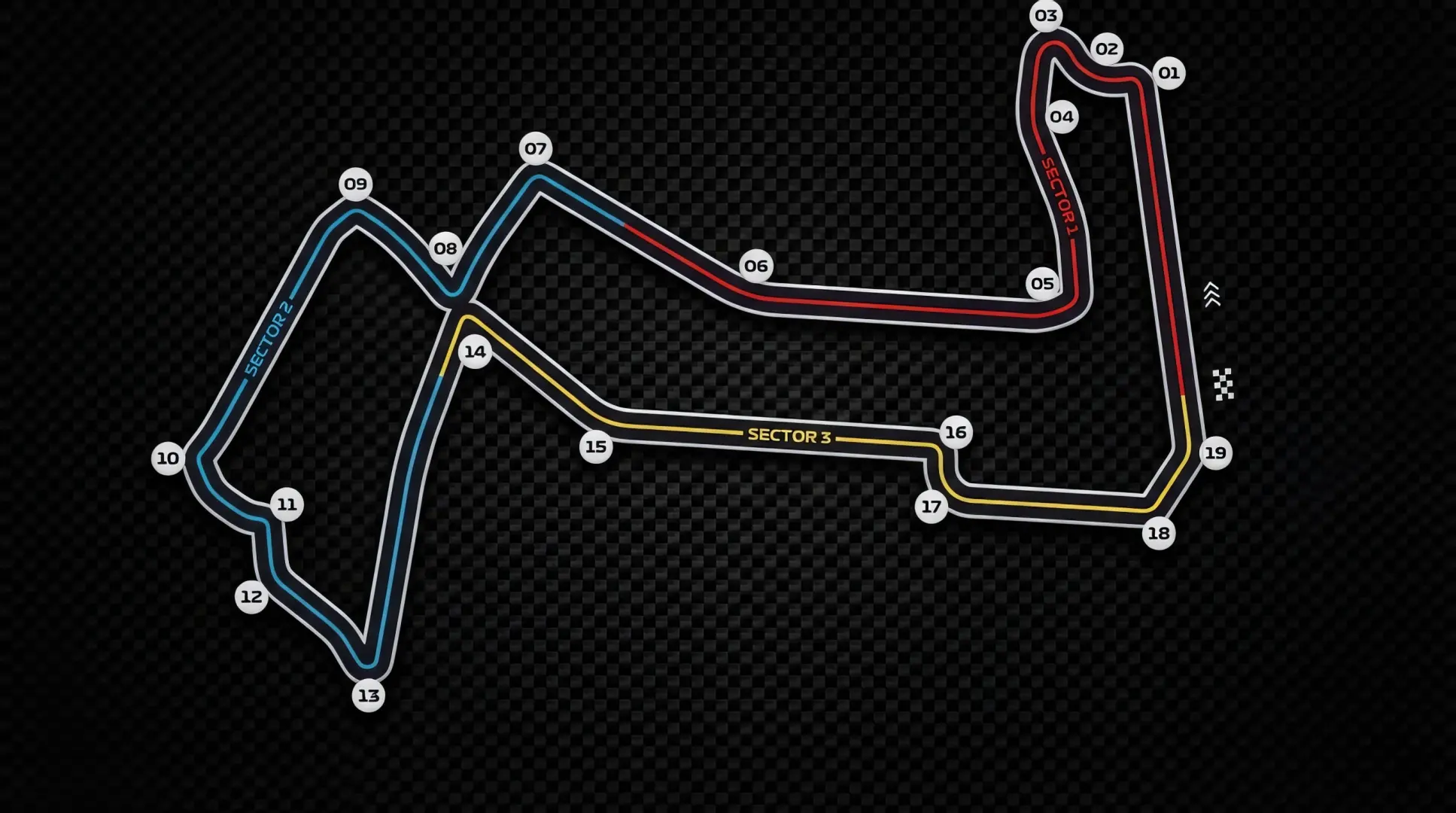
Compare the circuit length, turns, race distance, lap and pole records, driver wins, and elevation details for this Formula 1 track.
4.940 km
19
62
1:33.808
Lewis Hamilton
Fastest Q3 lap that secured Grand Prix pole on the applicable layout.
1:29.158
George Russell
Sebastian Vettel
5 wins
0 m
A 90-degree left-hander leading to the Anderson Bridge.
A series of 90-degree corners around the historic Padang cricket field.
Nelson Piquet Jr. deliberately crashed to bring out a safety car, helping his Renault teammate Fernando Alonso to win the race in one of F1's biggest controversies.
 Watch iconic moment on YouTube
The Marina Bay Street Circuit was conceived as part of Singapore's ambitious plan to establish itself as a premier Formula 1 destination. The circuit was designed by KBR, and is a modification of the original one first proposed by Hermann Tilke, the renowned circuit architect behind many modern Formula 1 tracks.
In 2008, Singapore had the honour of hosting the first night-time race in F1 history. The first Singapore Grand Prix at the Marina Bay Street Circuit took place on the 28th of September 2008, marking the 800th in the history of the world championship, and the first to be held at night under floodlights.
This groundbreaking event was the first street circuit in Asia for F1, bringing a new dimension to the sport. The inaugural race proved memorable for more reasons than just the lighting - Renault's Fernando Alonso claimed a controversial victory in what would later become known as one of Formula 1's most notorious races.
The track is 4.940 km (3.070 mi) long in a harbourside location similar in style to the Circuit de Monaco and the Valencia Street Circuit, though measurements vary slightly between sources, with some citing 5.063 km. The 23-turn Marina Bay Street Circuit winds its way around some of Singapore's landmarks, such as the Anderson Bridge, the Fullerton Hotel, and the striking Singapore Flyer, which opened in the same year as the inaugural Singapore race.
The circuit's most distinctive feature is its nighttime setting that is illuminated by thousands of floodlights around the track. The tight and winding layout of the circuit, along with the high temperatures and humidity, make for a challenging and demanding race for drivers and teams.
Over the years, the circuit has undergone several changes to improve racing and safety. The track has undergone minor changes over the past ten years, including the re-profiling of the 'Singapore Sling' – a once challenging corner which caught plenty of drivers out.
Since then, the Singapore Grand Prix has become an integral part of the F1 calendar, establishing itself as one of the sport's most spectacular venues. The event quickly established itself as one of the standouts on the F1 calendar, combining the technical challenges of a street circuit with the unique atmosphere of racing under artificial lights.
The Marina Bay Street Circuit represents a significant milestone in Formula 1's evolution, demonstrating how the sport could adapt and innovate while maintaining its core appeal. Its success paved the way for night racing to become a regular feature in Formula 1, fundamentally changing how the sport approaches scheduling and presentation for global audiences.
The circuit continues to hold a FIA Grade 1 license and remains one of the most technically demanding and visually stunning venues on the Formula 1 calendar, serving as a testament to Singapore's successful integration into the world of premier motorsport.