Circuit length
5.281 km
Abu Dhabi Grand Prix · Abu Dhabi
F1 circuit guide
Yas Marina Circuit is a Formula 1 circuit in Abu Dhabi associated with the Abu Dhabi Grand Prix. Its key figures include a 5.281 km layout, 16 turns, 58 race laps, and 9 metres of elevation change. This guide covers track statistics, lap records, famous corners, iconic Grand Prix moments, and Formula 1 history.
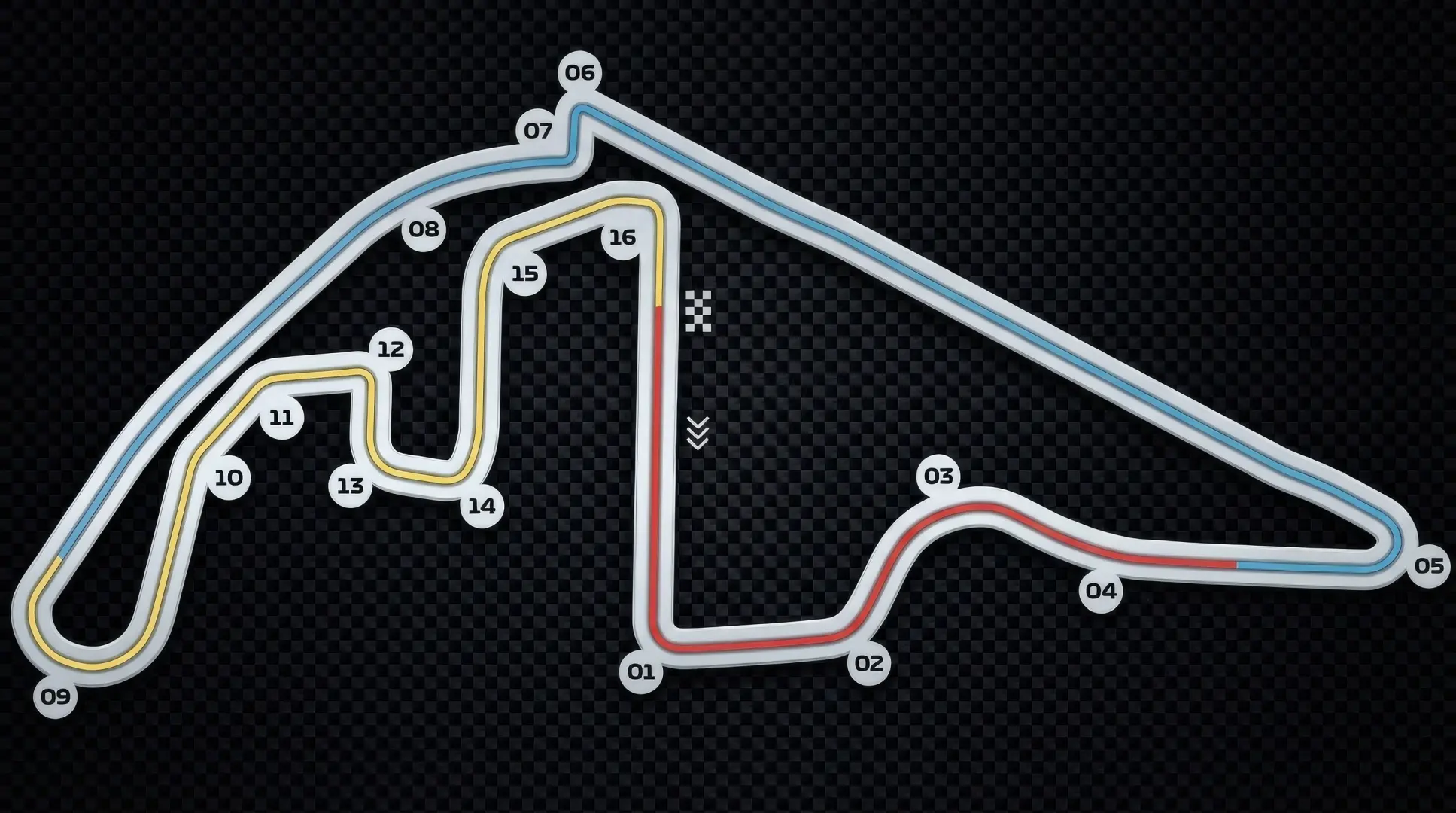
Compare the circuit length, turns, race distance, lap and pole records, driver wins, and elevation details for this Formula 1 track.
5.281 km
16
58
1:25.637
Kevin Magnussen
Fastest Q3 lap that secured Grand Prix pole on the applicable layout.
1:22.109
Max Verstappen
Lewis Hamilton
5 wins
9 m
A slower hairpin that has been widened to encourage more overtaking.
A new, fast, banked corner that replaced a slow chicane to improve flow and speed.
In one of the most controversial F1 moments, a late safety car restart allowed Max Verstappen to overtake Lewis Hamilton on the final lap to win his first World Championship.
 Watch iconic moment on YouTube
The Yas Marina Circuit in Abu Dhabi represents one of Formula One's most ambitious and visually striking venues. Built as part of the United Arab Emirates' broader strategy to establish itself as a global sporting and entertainment destination, this circuit has become synonymous with championship drama and architectural innovation.
The Yas Marina Circuit emerged from Abu Dhabi's Vision 2030 initiative, a comprehensive plan to diversify the emirate's economy beyond oil revenues. The project was conceived as the centerpiece of Yas Island, a massive entertainment and leisure development that would include theme parks, hotels, shopping centers, and a Formula One circuit.
His Highness Sheikh Mohammed bin Zayed Al Nahyan, then Crown Prince of Abu Dhabi, championed the Formula One project as part of a broader cultural and sporting strategy. The circuit was designed not merely as a racing venue but as an architectural statement that would showcase the UAE's ambitions on the global stage.
The project faced significant logistical challenges from the outset. Yas Island itself was largely artificial, requiring extensive land reclamation and infrastructure development. The circuit's location, surrounded by water and integrated with a luxury marina, demanded innovative engineering solutions.
Hermann Tilke, Formula One's premier circuit designer, was commissioned to create a track that would provide exciting racing while incorporating the region's cultural aesthetics. The brief called for a circuit that could host day-night races, featuring advanced lighting systems and architectural elements that would create a unique visual spectacle.
Construction began in 2007 with a budget exceeding $1.3 billion for the entire Yas Island development, with approximately $400 million dedicated to the circuit itself. The project required coordination between international contractors, local authorities, and Formula One's technical requirements.
The 5.554-kilometer circuit was designed as a hybrid layout, combining street circuit elements with permanent racing facility characteristics. The track features 21 corners, significant elevation changes, and multiple overtaking opportunities designed to promote competitive racing.
One of the circuit's most distinctive features is its unique day-to-night transition capability. The venue was equipped with over 1,600 LED light panels, making it only the second Formula One circuit capable of hosting twilight races after Singapore. The lighting system was engineered to provide consistent illumination levels that meet Formula One's broadcast requirements while creating dramatic visual effects.
The circuit's architectural centerpiece is the Yas Viceroy Hotel, which straddles the track with a unique steel and glass canopy. This iconic structure, designed by Asymptote Architecture, features over 5,000 diamond-shaped glass panels that change color through LED lighting systems. The hotel's position allows guests to watch racing action from their rooms, creating an unprecedented spectator experience.
The Yas Marina Circuit presents drivers with a diverse range of challenges across its various sectors. The opening sequence features a series of medium-speed corners leading to the circuit's longest straight, which stretches 1.2 kilometers and provides the primary overtaking opportunity.
The track's most technically demanding section occurs in the middle sector, featuring a series of 90-degree corners and chicanes that test car balance and driver precision. This area includes the circuit's signature marina section, where the track runs alongside luxury yachts and waterfront facilities.
The final sector incorporates the circuit's most unique element: the section that passes through the Yas Viceroy Hotel. This covered area creates a tunnel-like environment with dramatically different lighting conditions, adding to the driver challenge and visual spectacle.
The circuit's surface was constructed using specialized asphalt designed for the extreme desert climate. The track features adequate run-off areas and modern safety systems, though the abundance of 90-degree corners and relatively narrow track width have occasionally limited overtaking opportunities.
The Abu Dhabi Grand Prix debuted on November 1, 2009, with Lewis Hamilton claiming victory in the inaugural race. The event was positioned as Formula One's season finale, a strategic decision designed to maximize global attention and establish the race's significance within the championship calendar.
The early races at Yas Marina were characterized by spectacular visual presentation but often processional racing. The circuit's design, while aesthetically impressive, initially struggled to provide the wheel-to-wheel combat that Formula One desired. The abundance of medium-speed corners and limited overtaking zones meant that qualifying position often determined race results.
The 2010 Abu Dhabi Grand Prix became one of the most controversial races in the circuit's history. Sebastian Vettel's championship hopes appeared over when he suffered a puncture early in the race, but strategic decisions by other teams during a safety car period ultimately handed him the victory and his first world title. The race highlighted how strategic elements could create drama even when on-track passing proved difficult.
The circuit's role as season finale created several memorable championship moments. The 2012 race saw Sebastian Vettel claim his third consecutive title, while the venue's premium positioning in the calendar ensured high stakes and intense media attention.
The Yas Marina Circuit was designed with spectator experience as a primary consideration. The venue features 50,000 permanent seats with excellent sightlines across the track, complemented by numerous hospitality facilities and premium viewing areas.
The paddock complex incorporates cutting-edge facilities for teams, media, and VIP guests. The pit building features advanced timing and communication systems, while the media center was designed to accommodate Formula One's extensive global broadcast requirements.
The circuit's integration with the broader Yas Island development creates unique entertainment opportunities. Spectators can access theme parks, shopping centers, restaurants, and luxury accommodations within walking distance of the racing action. This integrated approach was designed to appeal to international tourists seeking comprehensive entertainment experiences.
The venue's marina facilities accommodate luxury yachts and boats, creating a unique atmosphere reminiscent of Monaco but with a distinctly Middle Eastern character. The waterfront setting provides dramatic backdrops for television coverage while offering premium hospitality opportunities.
Recognizing concerns about racing quality, circuit officials implemented several modifications to improve overtaking opportunities. The most significant changes occurred in 2021, when the circuit underwent substantial reconfiguration of its final sector.
The modifications eliminated several slower corners and created a faster, more flowing section that increased overtaking opportunities. The changes reduced lap times by approximately 10 seconds while maintaining the circuit's essential character and visual appeal.
These alterations demonstrated the circuit's commitment to improving racing quality while preserving the venue's unique architectural and cultural elements. The modifications were developed in consultation with Formula One and driver representatives to ensure optimal competitive balance.
The Abu Dhabi Grand Prix has become a significant cultural event in the UAE, attracting international visitors and showcasing Emirati hospitality and culture. The race weekend features extensive cultural programming, including concerts by major international artists, traditional performances, and cultural exhibitions.
The economic impact extends far beyond the race weekend itself. The circuit serves as a catalyst for tourism development, business conferences, and international investment in the region. Studies suggest the annual economic impact exceeds $500 million, supporting thousands of jobs across various sectors.
The event has also played a crucial role in developing motorsport culture within the UAE. Local driving programs, karting facilities, and racing schools have benefited from increased interest generated by Formula One's presence.
While early races were often criticized for limited on-track action, Yas Marina has produced several championship-defining moments. The 2021 season finale became one of the most controversial races in Formula One history, with Max Verstappen overtaking Lewis Hamilton on the final lap to claim his first world championship following contentious safety car decisions.
The 2019 race featured dramatic battles throughout the field, with multiple lead changes and strategic intrigue. Lewis Hamilton's victory that day secured Mercedes' sixth consecutive constructors' title, demonstrating how the circuit could produce compelling racing under the right circumstances.
The venue's role as season finale has created numerous emotional moments, including championship celebrations, farewell drives for retiring legends, and dramatic battles for constructor championships. These moments have gradually enhanced the circuit's reputation and historical significance.
The Yas Marina Circuit has served as a testing ground for various technological innovations in Formula One. The venue's advanced lighting systems have been continuously upgraded to improve broadcast quality and energy efficiency.
The circuit has also pioneered sustainable practices in Formula One, implementing solar power systems, water conservation measures, and waste reduction programs. These initiatives reflect the UAE's broader sustainability goals and demonstrate how major sporting events can incorporate environmental responsibility.
Recent technological additions include advanced digital systems for spectator engagement, including mobile apps providing real-time race data, augmented reality experiences, and enhanced connectivity throughout the venue.
The Yas Marina Circuit continues to evolve as part of Abu Dhabi's long-term vision for sports and entertainment. Ongoing developments on Yas Island include additional theme parks, cultural attractions, and recreational facilities that complement the racing venue.
The circuit's contract with Formula One extends through 2030, ensuring its continued role as the season finale. This long-term commitment allows for continued investment in facility improvements and racing quality enhancements.
The venue's influence extends beyond Formula One, hosting other major racing series, concerts, and corporate events throughout the year. This diversified usage model helps justify the significant infrastructure investment while maintaining the circuit's prominence in the global sporting calendar.
The Yas Marina Circuit represents both the opportunities and challenges of modern Formula One venue development. While initial criticism focused on limited racing action, subsequent modifications and the natural evolution of Formula One regulations have improved competitive quality.
The circuit's architectural innovation and integrated entertainment approach have influenced other venue developments worldwide. The concept of combining racing with broader entertainment and hospitality offerings has become a template for modern motorsport facility design.
The venue's success in establishing Abu Dhabi as a global sporting destination demonstrates the potential for Formula One to serve broader economic and cultural development goals. The circuit stands as a testament to the sport's global reach and its ability to create lasting cultural and economic impact in emerging markets.
Today, the Yas Marina Circuit occupies a unique position in Formula One as both a technological showcase and a symbol of the sport's global expansion. Its continued evolution reflects both the challenges and opportunities facing modern motorsport as it balances sporting excellence with entertainment value and economic impact.