Circuit length
6.174 km
Saudi Arabian Grand Prix · Saudi Arabia
F1 circuit guide
Jeddah Corniche Circuit is a Formula 1 circuit in Saudi Arabia associated with the Saudi Arabian Grand Prix. Its key figures include a 6.174 km layout, 27 turns, 50 race laps, and 12 metres of elevation change. This guide covers track statistics, lap records, famous corners, iconic Grand Prix moments, and Formula 1 history.
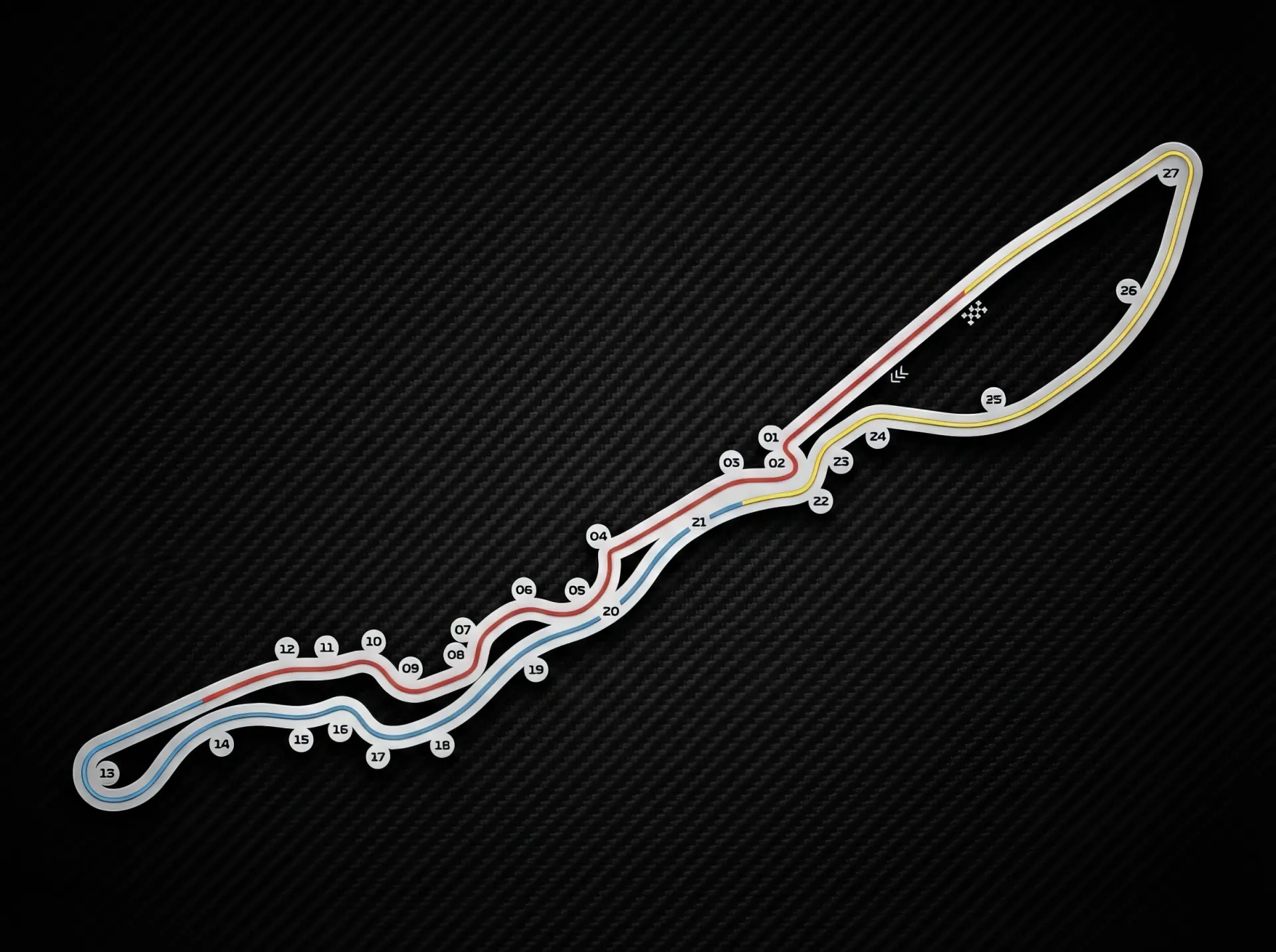
Compare the circuit length, turns, race distance, lap and pole records, driver wins, and elevation details for this Formula 1 track.
6.174 km
27
50
1:30.734
Lewis Hamilton
Fastest Q3 lap that secured Grand Prix pole on the applicable layout.
1:27.294
Max Verstappen
Max Verstappen
2 wins
12 m
A banked, high-speed left-hand hairpin that offers a unique challenge for a street circuit.
A rapid series of left-hand sweeps leading onto the back straight.
The inaugural race featured a season-long, intense, and controversial battle between Lewis Hamilton and Max Verstappen, including multiple restarts and collisions.
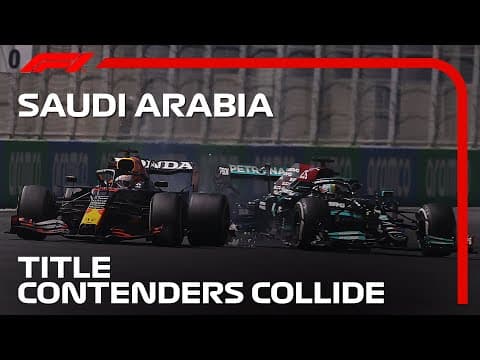 Watch iconic moment on YouTube
The Jeddah Corniche Circuit emerged from Saudi Arabia's ambitious Vision 2030 program, spearheaded by Crown Prince Mohammed bin Salman. This transformative initiative aimed to diversify the kingdom's economy, promote tourism, and enhance its international profile through major sporting events. The decision to bring Formula 1 to Saudi Arabia represented a cornerstone of this broader strategy.
In 2019, Saudi Arabia announced its entry into Formula 1 with the creation of the Saudi Arabian Grand Prix. Unlike traditional purpose-built circuits, the organizers chose to create a temporary street circuit along Jeddah's stunning Red Sea coastline. This bold decision reflected the kingdom's desire to showcase its modern urban landscape while creating a unique racing spectacle.
The circuit was designed by Tilke Engineers, the renowned German firm led by Hermann Tilke, who had previously created numerous Formula 1 venues including Bahrain, Shanghai, and Istanbul. The challenge was extraordinary: create a world-class Formula 1 circuit using public roads along the Corniche waterfront, all within an extremely compressed timeframe.
Construction began in earnest in 2020, despite the global challenges posed by the COVID-19 pandemic. The project required extensive coordination with city infrastructure, temporary modifications to existing roads, and the installation of comprehensive safety systems meeting FIA Grade 1 standards.
The Jeddah Corniche Circuit stretches 6.174 kilometers, making it the second-longest circuit on the Formula 1 calendar after Spa-Francorchamps. The track features 27 corners, creating one of the most complex and demanding layouts in modern Formula 1.
The circuit's most distinctive characteristic is its incredible speed. With long straights and flowing high-speed corners, drivers regularly exceed 320 km/h, making it one of the fastest street circuits in motorsport history. The layout incorporates sweeping curves that follow the natural coastline, creating a unique driving experience that combines the precision required for street racing with the high-speed thrills typically associated with purpose-built circuits.
The track runs counterclockwise, which is relatively uncommon in Formula 1, adding an additional challenge for drivers who must adapt their racing lines and braking techniques. The proximity of concrete barriers throughout the circuit creates an unforgiving environment where precision is paramount.
Key sections of the circuit include:
The circuit's temporary nature means that concrete barriers line most of the track, creating a canyon-like effect that adds to the visual drama while demanding absolute precision from drivers.
The inaugural Saudi Arabian Grand Prix took place on December 5, 2021, marking a historic moment for both Formula 1 and the Middle East. The race was scheduled as a night event, creating stunning visuals as the cars raced under floodlights against the backdrop of Jeddah's illuminated skyline and the Red Sea.
The debut weekend immediately established the circuit's reputation for producing dramatic racing. Qualifying sessions were interrupted by multiple red flags due to crashes, highlighting the circuit's challenging and unforgiving nature. The high-speed layout and numerous corners created a perfect storm for close racing but also increased the risk of incidents.
The race itself proved to be one of the most dramatic of the 2021 season, featuring multiple safety car periods, intense battles between championship contenders Lewis Hamilton and Max Verstappen, and several controversial moments that would be discussed for months afterward. Hamilton ultimately won the inaugural race, but the event will be remembered more for its chaotic nature and the spectacular racing it produced.
The success of the debut, despite its challenges, confirmed the circuit's place on the Formula 1 calendar and demonstrated the potential for street racing in unconventional locations.
The second Saudi Arabian Grand Prix in March 2022 brought important lessons learned from the inaugural event. Track safety measures were enhanced, and minor layout adjustments were made to improve racing conditions. However, the circuit's challenging nature continued to produce dramatic moments.
The 2022 race weekend was marked by an extraordinary number of interruptions. The practice sessions and qualifying saw multiple red flag periods, while the race itself featured several safety car deployments. This pattern established the circuit's reputation as one of Formula 1's most unpredictable venues.
Despite the challenges, the 2022 event showcased improved organization and infrastructure. The temporary facilities were refined based on lessons learned from the inaugural race, and the overall event presentation reached new levels of sophistication.
Max Verstappen claimed victory in 2022, demonstrating the circuit's potential to produce different winners and exciting championship battles. The race featured intense wheel-to-wheel combat and strategic complexity that entertained fans worldwide.
Creating a temporary Formula 1 circuit presents unique logistical challenges, and Jeddah represents one of the most ambitious projects of its kind. The circuit requires extensive temporary infrastructure, including:
Safety Systems: Comprehensive barrier installation, run-off areas where possible, and advanced crash protection systems meeting FIA standards. The proximity of concrete walls throughout most of the circuit necessitates exceptional safety measures.
Facilities: Temporary paddock areas, team facilities, media centers, and spectator amenities. The paddock area accommodates all Formula 1 teams, support series, and administrative functions in a compact waterfront setting.
Lighting: A sophisticated LED lighting system illuminating the entire 6.174-kilometer circuit for night racing. The system was designed to provide consistent lighting levels for television broadcast while creating dramatic visual effects.
Spectator Areas: Grandstands positioned at key viewing points around the circuit, offering fans spectacular views of high-speed action against the Red Sea backdrop.
The temporary nature means the circuit is essentially rebuilt each year, requiring months of preparation and coordination with Jeddah city authorities to minimize disruption to normal traffic patterns.
The Jeddah Corniche Circuit has faced various challenges since its inception. The high-speed nature and barrier-lined layout have raised safety concerns among drivers and teams. Several high-profile accidents during race weekends highlighted the risks associated with the circuit's unforgiving characteristics.
Driver feedback has been mixed, with many praising the circuit's speed and spectacle while expressing concerns about safety margins. The challenge of creating adequate run-off areas on a street circuit has been an ongoing discussion between circuit organizers and the FIA.
The circuit has also been subject to broader discussions about Formula 1's expansion into new markets and the sport's relationship with different political systems. These conversations reflect the complex dynamics of modern international motorsport.
Weather conditions have occasionally presented additional challenges, with sandstorms and extreme temperatures affecting track conditions and visibility during race weekends.
The Jeddah Corniche Circuit has quickly established distinctive racing characteristics that influence team strategies and driver approaches. The high-speed nature of the track places premium demands on aerodynamic efficiency and straight-line speed, often favoring cars with low-drag configurations.
Tire management becomes crucial due to the track's abrasive surface and high-speed corners that generate significant loads. Teams must balance performance with tire degradation, creating strategic opportunities throughout race distance.
The numerous corners and potential overtaking zones create multiple strategic elements. DRS zones are positioned to enhance overtaking opportunities, though the high-speed nature means drivers must commit fully to passing maneuvers.
Qualifying performance is particularly important at Jeddah, as track position becomes crucial for race success. The circuit's layout can make overtaking challenging despite its long straights, placing emphasis on Saturday performance.
The circuit represents significant technological achievements in temporary circuit construction. The lighting system alone required innovative solutions to illuminate such a long and complex layout while meeting broadcast standards.
Safety technology implementation has been crucial, with advanced barrier systems and debris fencing designed specifically for the circuit's high-speed characteristics. The FIA has worked closely with circuit designers to implement cutting-edge safety solutions.
Timing and scoring systems had to be adapted for the circuit's unique layout and temporary nature, ensuring accurate data collection and transmission throughout the 6.174-kilometer lap.
The Saudi Arabian Grand Prix has generated significant economic impact for Jeddah and the broader kingdom. The event attracts thousands of international visitors, supporting hotels, restaurants, and tourism infrastructure throughout the region.
The race weekend has become a major cultural event in Saudi Arabia, featuring concerts, entertainment, and festivities that extend beyond motorsport. This aligns with the kingdom's broader cultural transformation and entertainment industry development.
Local motorsport development has received significant investment, with programs designed to develop Saudi racing talent and technical expertise. The circuit serves as a focal point for these initiatives.
The event has also contributed to Saudi Arabia's international profile, showcasing modern infrastructure and organizational capabilities to a global television audience of hundreds of millions.
Since its debut, the circuit has undergone continuous refinement based on experience and feedback. Safety improvements, facility enhancements, and operational optimizations have been implemented each year.
Future developments may include permanent facility improvements, though the circuit's temporary nature remains a defining characteristic. Discussions continue about potential layout modifications to enhance racing while maintaining the circuit's unique character.
The long-term future of the circuit appears secure as part of Formula 1's commitment to the region and Saudi Arabia's ongoing investment in major sporting events. The race has established itself as a significant fixture on the Formula 1 calendar.
The Jeddah Corniche Circuit represents more than just a racing venue; it symbolizes Saudi Arabia's cultural and economic transformation. The circuit showcases the kingdom's modern capabilities while honoring its strategic location along historic trade routes.
The waterfront setting creates connections between Saudi Arabia's maritime heritage and its contemporary aspirations. The circuit serves as a bridge between traditional culture and modern international engagement.
Regional motorsport development has been significantly enhanced, with the circuit serving as inspiration for other Middle Eastern nations considering major motorsport investments.
In its brief history, the Jeddah Corniche Circuit has already left a significant mark on Formula 1. Its unique combination of street circuit characteristics with high-speed racing has created a new template for temporary circuit design.
The circuit has demonstrated that Formula 1 can successfully operate in challenging environments while maintaining safety standards and producing exciting racing. This has opened possibilities for future street circuits in unconventional locations.
The visual spectacle created by the circuit, particularly during night racing, has set new standards for circuit presentation and television production. The combination of speed, technology, and dramatic urban backdrop has enhanced Formula 1's global appeal.
The success of the Saudi Arabian Grand Prix has reinforced Formula 1's expansion strategy and demonstrated the sport's ability to adapt to diverse cultural and geographic contexts while maintaining its core competitive elements.
As the circuit continues to evolve, it stands as a testament to ambitious vision, technological innovation, and the global reach of modern Formula 1, while contributing to the ongoing transformation of motorsport in the 21st century.