Circuit length
4.361 km
Canadian Grand Prix · Canada
F1 circuit guide
Circuit Gilles Villeneuve is a Formula 1 circuit in Canada associated with the Canadian Grand Prix. Its key figures include a 4.361 km layout, 14 turns, 70 race laps, and 13 metres of elevation change. This guide covers track statistics, lap records, famous corners, iconic Grand Prix moments, and Formula 1 history.
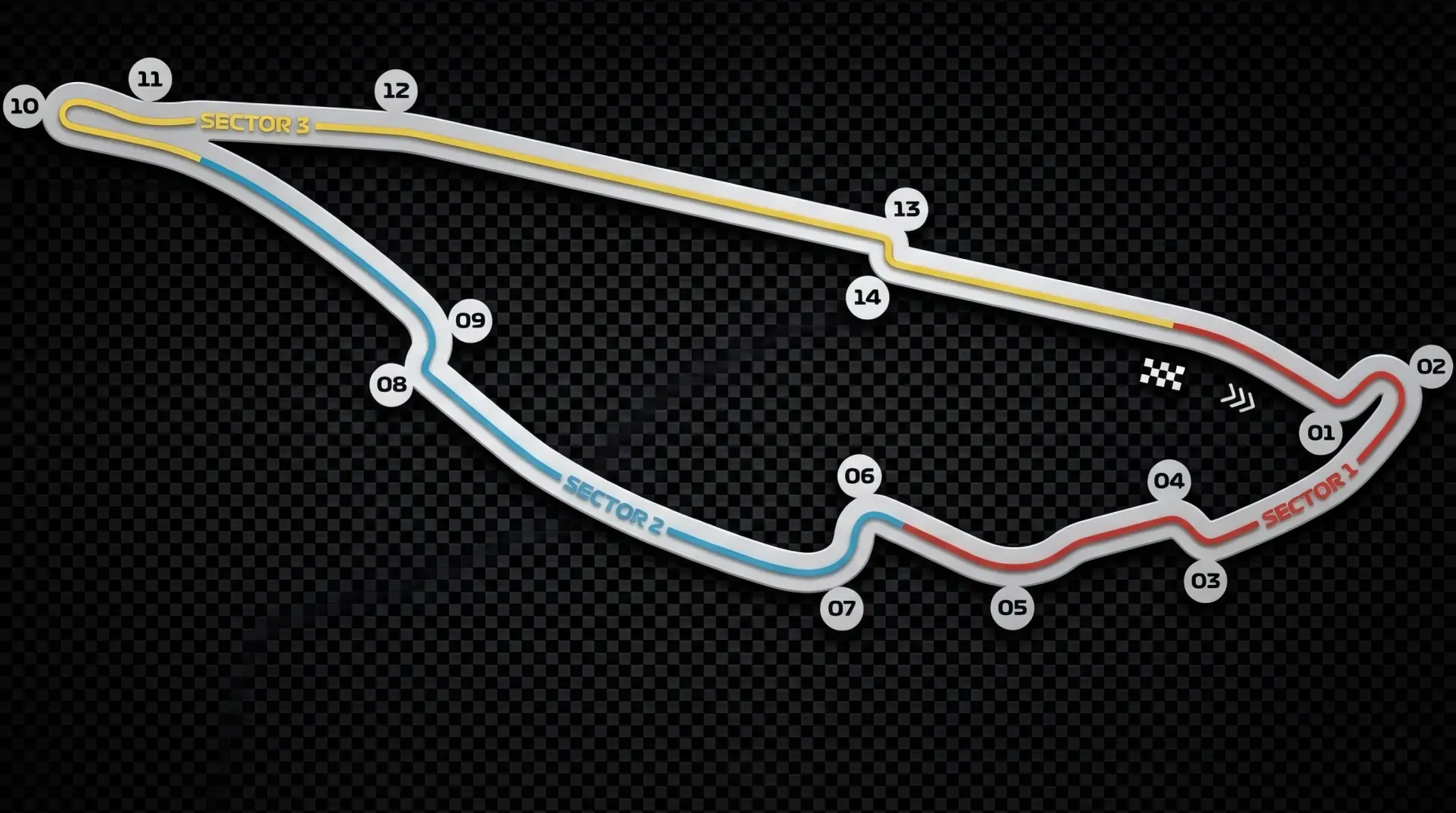
Compare the circuit length, turns, race distance, lap and pole records, driver wins, and elevation details for this Formula 1 track.
4.361 km
14
70
1:13.078
Valtteri Bottas
Fastest Q3 lap that secured Grand Prix pole on the applicable layout.
1:10.240
Sebastian Vettel
Lewis Hamilton/Michael Schumacher
7 wins
13 m
The infamous wall on the outside of the final chicane, which has claimed many famous victims over the years.
A very tight hairpin at the end of a long straight, a prime overtaking spot.
In a single race, three world champions—Damon Hill, Michael Schumacher, and Jacques Villeneuve—all crashed into the same wall at the final chicane, giving it its legendary name.
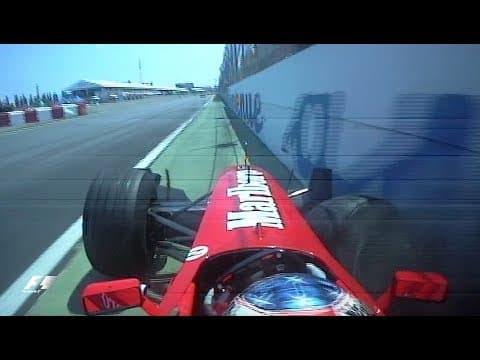 Watch iconic moment on YouTube
The Circuit Gilles Villeneuve, located on Île Notre-Dame in Montreal, Quebec, has been the home of the Canadian Grand Prix since 1978 and stands as one of Formula 1's most beloved venues.
The circuit was originally built for the 1976 Summer Olympics in Montreal as part of the rowing basin complex. After the Olympics, the artificial island was transformed into a racing circuit, designed by Roger Peart. The track was initially called Circuit Île Notre-Dame when it first hosted the Canadian Grand Prix in 1978, replacing the previous venue at Mosport Park.
The circuit was renamed Circuit Gilles Villeneuve in 1982 following the tragic death of Canadian Formula 1 driver Gilles Villeneuve at the Belgian Grand Prix that year. Villeneuve, a Quebec native and Ferrari driver, had become a national hero in Canada and was beloved for his spectacular, fearless driving style. The renaming served as a permanent tribute to Canada's first Formula 1 superstar.
The 4.361-kilometer (2.710-mile) circuit is unique in Formula 1 for several reasons. Built on an artificial island in the St. Lawrence River, it features a semi-permanent layout with concrete barriers lining much of the track. The circuit is known for its long straights, particularly the back straight leading to the chicane, and its challenging final corners that flow onto the main straight.
The track's most famous feature is the Wall of Champions at Turn 13-14, where numerous world champions have crashed over the years, including Damon Hill, Michael Schumacher, and Jenson Button. The circuit demands a unique setup compromise between straight-line speed and cornering ability.
The Circuit Gilles Villeneuve has produced some of Formula 1's most memorable races. Notable moments include Gilles Villeneuve's emotional final home victory in 1981, Jean Alesi's breakthrough win for Ferrari in 1995, and Lewis Hamilton's dramatic victory in the rain-shortened 2011 Canadian Grand Prix, which featured multiple safety car periods and lasted over four hours.
The circuit has also witnessed several championship-deciding moments and has a reputation for producing unpredictable races due to its unique characteristics and Montreal's variable weather patterns.
Throughout the 1990s and 2000s, the circuit underwent various safety improvements and facility upgrades while maintaining its essential character. The pit complex was modernized, and grandstand facilities were expanded to accommodate growing crowds.
The Canadian Grand Prix briefly left the F1 calendar from 2009-2010 due to financial disputes but returned in 2011 to great fanfare. The race consistently draws large, enthusiastic crowds who create one of the best atmospheres on the Formula 1 calendar.
Today, the Circuit Gilles Villeneuve remains one of Formula 1's most popular venues among drivers and fans alike. Its combination of high speeds, close racing, and the unique challenge of racing on a semi-permanent street circuit surrounded by water makes it distinctive in the modern F1 calendar.
The circuit continues to honor its namesake while serving as Canada's primary motorsport venue, hosting not only Formula 1 but also other racing series throughout the year. Its location in Montreal, with the city skyline as a backdrop, creates one of the most picturesque settings in motorsport.
The track's enduring popularity demonstrates how the vision of creating a world-class racing venue on an Olympic island has succeeded beyond its original ambitions, cementing Montreal's place as a cornerstone of the Formula 1 world championship.