Circuit length
4.304 km
Mexico City Grand Prix · Mexico
F1 circuit guide
Autodromo Hermanos Rodriguez is a Formula 1 circuit in Mexico associated with the Mexico City Grand Prix. Its key figures include a 4.304 km layout, 17 turns, 71 race laps, and 0 metres of elevation change. This guide covers track statistics, lap records, famous corners, iconic Grand Prix moments, and Formula 1 history.
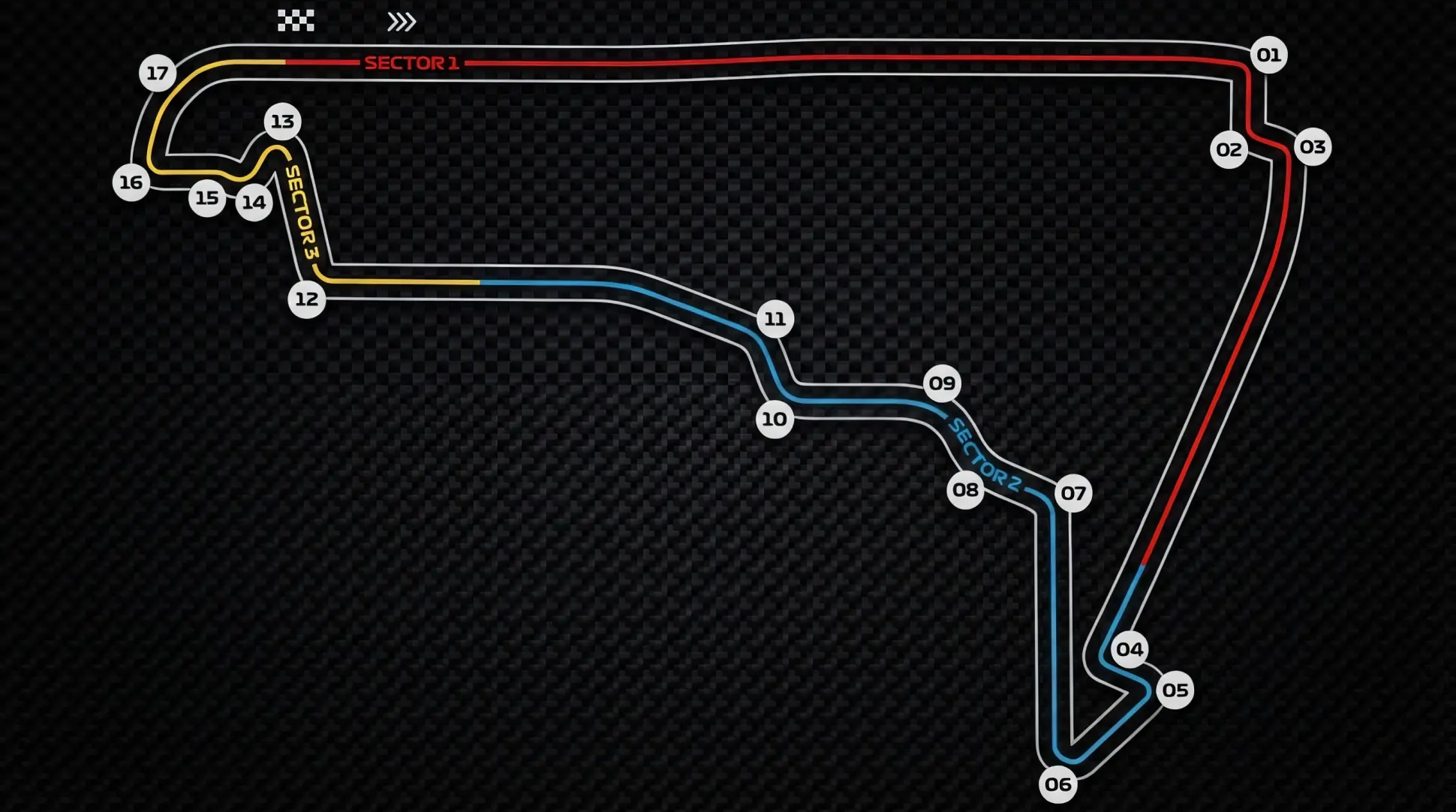
Compare the circuit length, turns, race distance, lap and pole records, driver wins, and elevation details for this Formula 1 track.
4.304 km
17
71
1:17.774
Valtteri Bottas
Fastest Q3 lap that secured Grand Prix pole on the applicable layout.
1:14.759
Daniel Ricciardo
Max Verstappen
5 wins
0 m
A slow, technical section that winds through a former baseball stadium, creating an incredible atmosphere.
The final corner, a fast, banked right-hander, though the full version is now bypassed by the stadium section.
The race was almost cancelled when over 200,000 spectators overwhelmed security, sitting dangerously close to the track edge, though the race eventually went ahead.
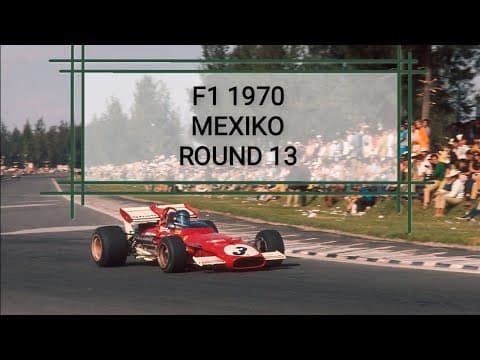 Watch iconic moment on YouTube
The story of the Autódromo Hermanos Rodríguez begins with an ambitious academic project. In 1953, a student named Óscar Fernández designed the circuit as his thesis, creating what would become one of the most challenging and storied racing venues in the world. The circuit sits at an extraordinary elevation of 2,238 meters (7,343 feet) above sea level, making it one of the highest racing circuits in the world. This extreme altitude creates unique challenges for both drivers and their cars, with the thin air causing difficulties while simultaneously reducing aerodynamic drag.
The idea for a dedicated racing circuit in Mexico City was championed by the father of the famed Mexican racing brothers, Ricardo and Pedro Rodríguez. As an advisor to then-President Adolfo López Mateos, he successfully persuaded the president to develop a racetrack within the Magdalena Mixiuhca sports park, a public park in Mexico City.
Construction of the original circuit took place during 1959, with the project completed by year's end. The facility was initially known as the Autódromo Magdalena Mixiuhca, named after the public park where it was built. The first race, appropriately called the Mexico City 500 Miles, took place on December 20, 1959, and was fittingly won by Pedro Rodríguez, with his brother Ricardo finishing third, separated by another great local racer of the era.
This inaugural victory by Pedro Rodríguez proved prophetic, as the circuit would become intimately associated with the Rodríguez brothers throughout its early history, ultimately taking their name in tribute to their contributions to Mexican motorsport.
Formula One arrived at the circuit in 1962 for a non-championship race, marking Mexico's entry into the world of premier international motorsport. The following year, 1963, the Mexican Grand Prix became a full World Championship event, with the inaugural race won by Jim Clark. This marked the beginning of Mexico's first golden era in Formula One, as the country became a regular fixture on the world championship calendar.
The circuit remained part of the Formula One calendar through 1970, establishing itself as a challenging and unique venue that tested both man and machine. The high altitude presented unprecedented challenges for Formula One teams, requiring special engine tuning and setup adjustments to cope with the thin air. For drivers, the reduced oxygen levels added an extra layer of physical and mental challenge to an already demanding sport.
The circuit's history became forever intertwined with tragedy when Ricardo Rodríguez died in practice for the non-championship 1962 Mexican Grand Prix, shortly after the circuit opened. The loss of Ricardo, one of Mexico's most promising young drivers, cast a shadow over the venue that would deepen with further tragedy.
Nine years later, in 1971, Pedro Rodríguez was also killed behind the wheel, though this occurred during a sports car race at the Norisring in Germany, not at the Mexican circuit. In honor of both fallen brothers, the circuit was officially renamed the Autódromo Hermanos Rodríguez in 1972, at the behest of then-President Luis Echeverría. This renaming served as a permanent memorial to two of Mexico's greatest racing talents and their contributions to motorsport.
The original Formula One era ended in 1970 due to mounting safety concerns, particularly regarding crowd control and spectator safety. The circuit's location in a public park presented unique challenges for managing large crowds, and incidents involving spectators on or near the track became increasingly problematic. Notable safety issues included incidents where dogs managed to run onto the track, causing damage to racing cars, including Jackie Stewart's vehicle during one memorable race.
After Formula One's departure, the circuit reverted to hosting mainly national racing for the rest of the decade. During this period, American IndyCars made a brief two-year visit in 1980 and 1981, racing in what was called the Gran Premio Tecate, providing some international racing presence during Formula One's absence.
Formula One returned to the Autódromo Hermanos Rodríguez in 1986 following the construction of a new pit complex and other safety improvements. This second era of Formula One racing at the circuit lasted through 1992, providing another seven years of world championship racing in Mexico. However, despite the improvements, ongoing safety concerns about the circuit's location in a public park and related crowd control issues ultimately led to Formula One's second departure from the venue after the 1992 season.
This second departure marked the beginning of a long hiatus for Formula One in Mexico, lasting over two decades and leaving Mexican motorsport fans without their premier racing event.
For over twenty years, the Autódromo Hermanos Rodríguez existed without Formula One, hosting various other motorsport events and serving the local racing community. During this extended period, there were numerous attempts to bring the Mexican Grand Prix back to the Formula One calendar, including a planned return in April 1980 that was ultimately cancelled. Despite these setbacks, the circuit remained an important venue for Mexican motorsport and continued to maintain its facilities and reputation.
The circuit underwent significant modifications and improvements in preparation for Formula One's much-anticipated return. The extension and reprofiling of the front straight allowed for a new paddock area and media center to be built, bringing the facility up to modern Formula One standards. The legendary esses situated between Turns 7 and 13 had the majority of their wide bends replaced with fixed-angle turns, while the Foro section of the track was altered to include low-speed technical sections that would provide better racing opportunities.
Formula One finally returned to the Autódromo Hermanos Rodríguez in 2015 after a 23-year absence, marking a triumphant homecoming for Mexican motorsport. The return proved immediately successful, with the Mexican Grand Prix quickly becoming one of the most popular and atmospherically charged events on the Formula One calendar.
The event faced a temporary setback when it was cancelled in 2020 due to the COVID-19 pandemic, but returned in 2021 with a new official name: the Mexico City Grand Prix. The 2021 race proved particularly special for Mexican fans when Sergio Pérez became the first Mexican driver to finish on the podium at his home race, creating an emotional and historic moment that embodied the circuit's deep connection to Mexican racing heritage.
The Mexico City Grand Prix has secured a long-term contract to remain on the Formula One calendar, ensuring that the Autódromo Hermanos Rodríguez will continue to play a vital role in world championship racing for years to come.
Today, the Autódromo Hermanos Rodríguez stands as one of the most distinctive and challenging circuits in motorsport. Its extreme elevation of over 2,200 meters above sea level makes it unique among Formula One venues, creating a set of challenges that exist nowhere else in the sport. The combination of tight corners, long straights, and elevation changes consistently produces thrilling race moments and memorable competitions.
The circuit serves as both a sporting venue and a living memorial to Ricardo and Pedro Rodríguez, two brothers whose brief but brilliant careers helped establish Mexico as a serious motorsport nation. From its origins as a student's thesis project to its current status as one of Formula One's most beloved venues, the Autódromo Hermanos Rodríguez represents the passion, dedication, and resilience of Mexican motorsport.
The venue continues to evolve and improve while maintaining the unique character that makes it one of the most challenging and rewarding circuits for drivers to master. Its high altitude, passionate crowds, and rich history combine to create an atmosphere unlike anywhere else in motorsport, ensuring its place as a jewel in the crown of international racing.